Health and Gender Support Project (HGSP)
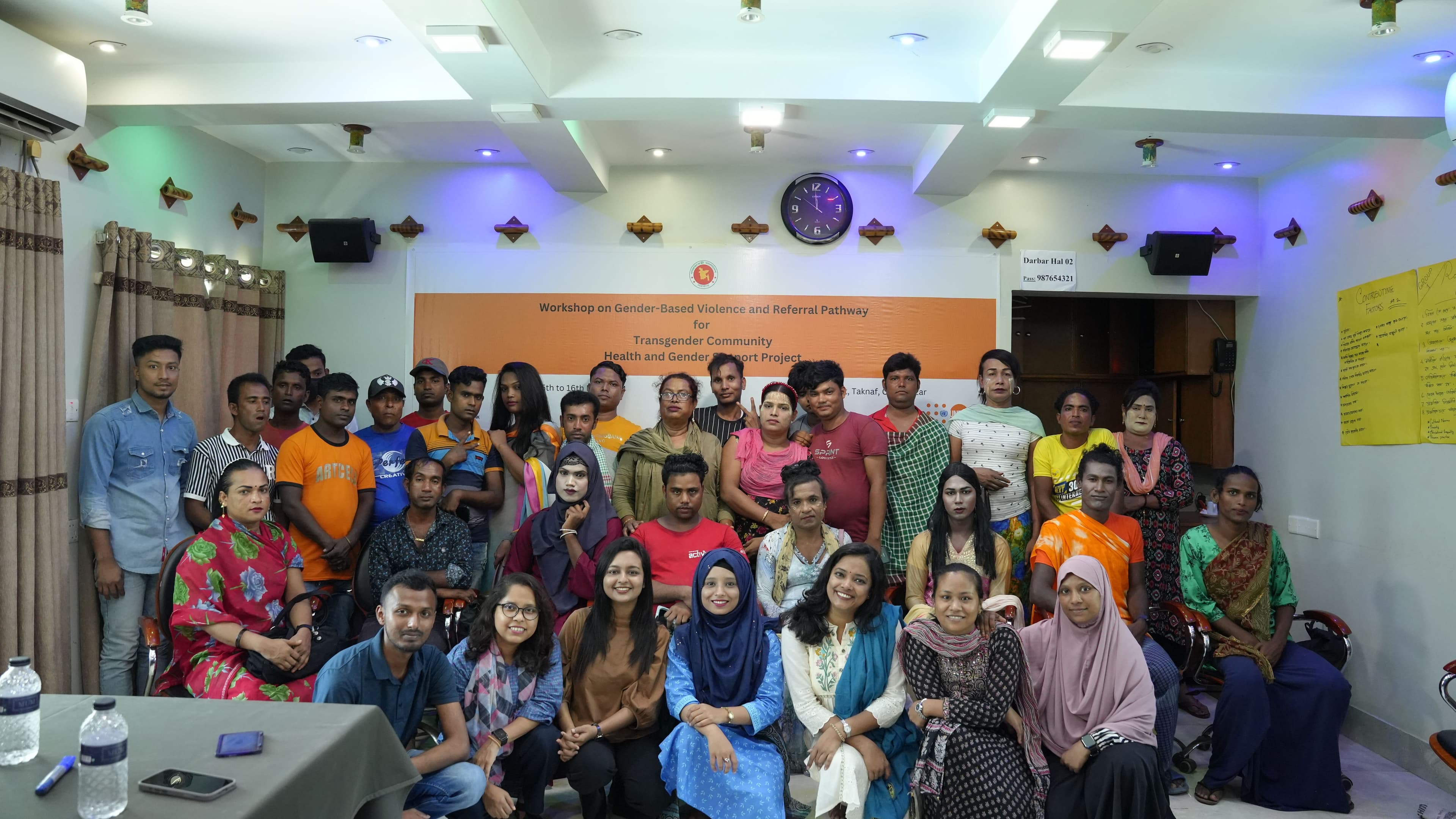
The Health and Gender Support Project targets the significant challenges of Gender-based Violence (GBV) affecting both the host community and displaced Rohingya populations, within the Chattogram division. Statistics from the 2015 Violence Against Women Survey indicate a high prevalence of GBV, with 48% of married women in the Chattogram division reporting violence. Most disclosures centre around Intimate Partner Violence (IPV), including physical assault and emotional abuse. However, access to GBV response services within the healthcare system is limited, with approximately 85% of host communities lacking adequate provisions. Vital gaps include insufficient clinical management of rape and psychosocial support services. Under the umbrella of World Bank-funded Health and Gender Support Project (HGSP), ActionAid Bangladesh implemented the work plan titled ‘Strengthening Gender-based Violence (GBV) prevention and response services though OCCs at District and Upazila level and enhancing lifesaving response for women and girls through an integrated GBV/SRHR approach at Host and Rohingya communities in Cox’s Bazar’ with the partnership of the United Nations Population Fund (UNFPA) from 2021 to 2025.
With a budget of USD 25 million, ActionAid Bangladesh put its continuous effort on enhancing and establishing infrastructure and strengthening services for gender-based violence survivors at 1 One Stop Crisis Centre (OCC) at Cox’s Bazar District Hospital and 4 One Stop Crisis Cells at Ukhia, Teknaf, Moheshkhali, and Kutubdia upazilas with the collaboration of the Ministry of Health and Family Welfare (MoHFW) and the Ministry of Women and Children Affairs (MoWCA).
The key interventions included GBV Case Management; Referral; and Mental Health and Psychosocial Services (MHPSS) services delivery in Government Facilities through District Hospital One-stop crisis centre and Upazila level 4 one-stop crisis cells; capacity building activities for stakeholders on GBV basic concepts, Psychosocial Support Services (PSS); ensuring confidential GBV Information Management System, as well as support to running and operationalization of 2 Women Friendly Spaces (WFSs) in camps.
Project Key Outputs
• Established Three new One Stop Crisis Cells (OC Cells) at Ukhia, Kutubdia, Moheshkhali Upazila Health Complex, and renovated One OCCell at Teknaf Upazila Health Complex, and One Stop Crisis Centre (OCC) at Cox’s Bazar 250 Bed Sadar District Hospital and improved access to and utilization of integrated SRHR and GBV prevention and response services in district level and upazila level facilities of Cox's Bazar.
• Strengthened GBV response service provision including case management and referral pathway system in five locations (Cox’s bazar district, Ukhia, Teknaf, Moheshkhali, and Kutubdia to ensure the lifesaving emergency support for the GBV survivors including CMR (Clinical Management of Rape), Psychosocial support, safety and security through Police, Legal Assistance etc. through OCCs.
• Advocacy and capacity building activities for the 300 government actors and frontline GBV actors of hospitals including doctors, nurses, midwives, police, Department of Social Welfare, Legal Assistance, Community Health Workers etc. on GBV basics, survivor centred approaches, referral pathway, trauma counselling, stress management, GBV Case Management, PSS, and MHPSS services etc. resulting with improved survivor friendly attitudes among the service providers.
• A total of 733 individuals (women and girls) participated in structured psychosocial support activities and showed improved behavioral approach. In addition to that, a total of 6690 individuals (Girls-1558, Women-5132) received individual Psychosocial Support (PSS) and (Mental Health and Psychosocial Support (MHPSS) services from five OCCs and WFSs.
• A total of 320 individual women joined social support services at the Women Friendly Space (WFSs). Additionally, a total of 80 individual women, among them 1 person with disabilities, received skill development and 120-hour nonformal technical training on women’s salon service (20 women), Tailoring and Dressmaking (60 women).
• A total of 22,058 community members including men, women, girls, boys, persons with disabilities and individuals with intersectional identities participated in GBV awareness-raising activities across Rohingya camps and host communities of Cox’s Bazar district.
Impact Stories
Featured News
Project Gallery