“I Don’t Know What We Will Eat or Where We Will Stay”
These were the words of Mariam* from Pekua Upazila in Cox’s Bazar, where recent flooding has left thousands of families struggling to cope with the loss of food, income, and safe shelter.
“These past few days have been very hard for my children. We don’t always have enough food, and they often fall asleep after spending hours hungry. Floodwater entered our home and ruined everything. Now I don’t know what we will eat or where we will stay with the children.”
These were the words of Mariam* from Pekua Upazila in Cox’s Bazar, where recent flooding has left thousands of families struggling to cope with the loss of food, income, and safe shelter.
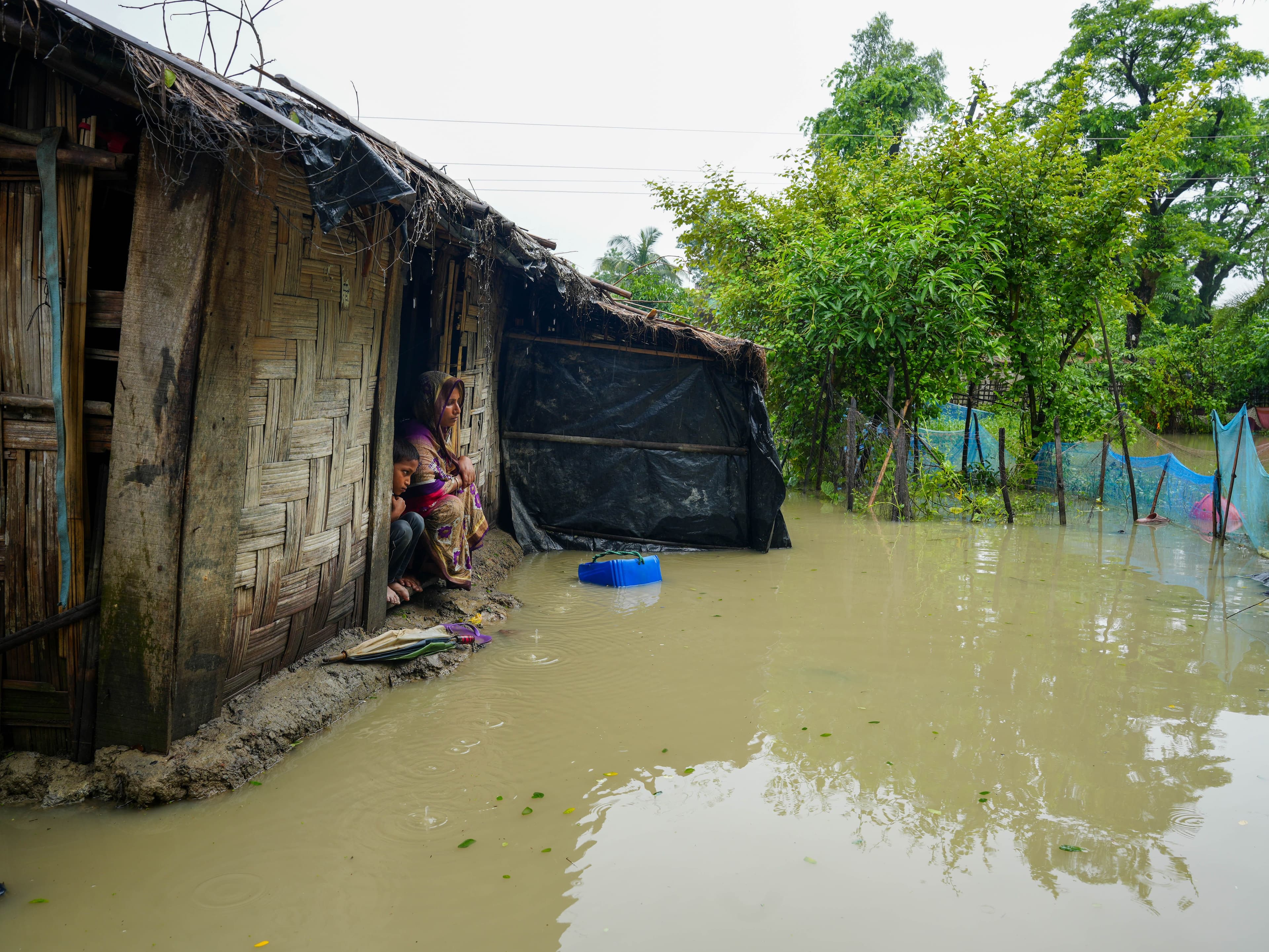
When ActionAid staff visited her community, floodwater still surrounded her home. Knee-deep water covered the yard and had already reached the veranda.
Mariam is the mother of five children, all of whom depend on her daily care and support. Her husband, the family’s sole breadwinner, works as a mason. However, continuous rain and flooding have left him without work for the past ten days.
“Life was already difficult before the flood,” Mariam said. “Now there is no work and very little food at home. Some days, if I can feed the children even one meal, I feel grateful.”
Like many families in the area, they were caught off guard by the speed of the flooding. Water entered their home overnight, damaging household belongings, food supplies, and cooking facilities. Floodwater submerged the family’s kitchen and clay stove, forcing them to set up a temporary cooking corner inside their living space. With no savings to rely on, Mariam borrowed money from a neighbour to buy rice and lentils so the family could continue having at least one meal a day.
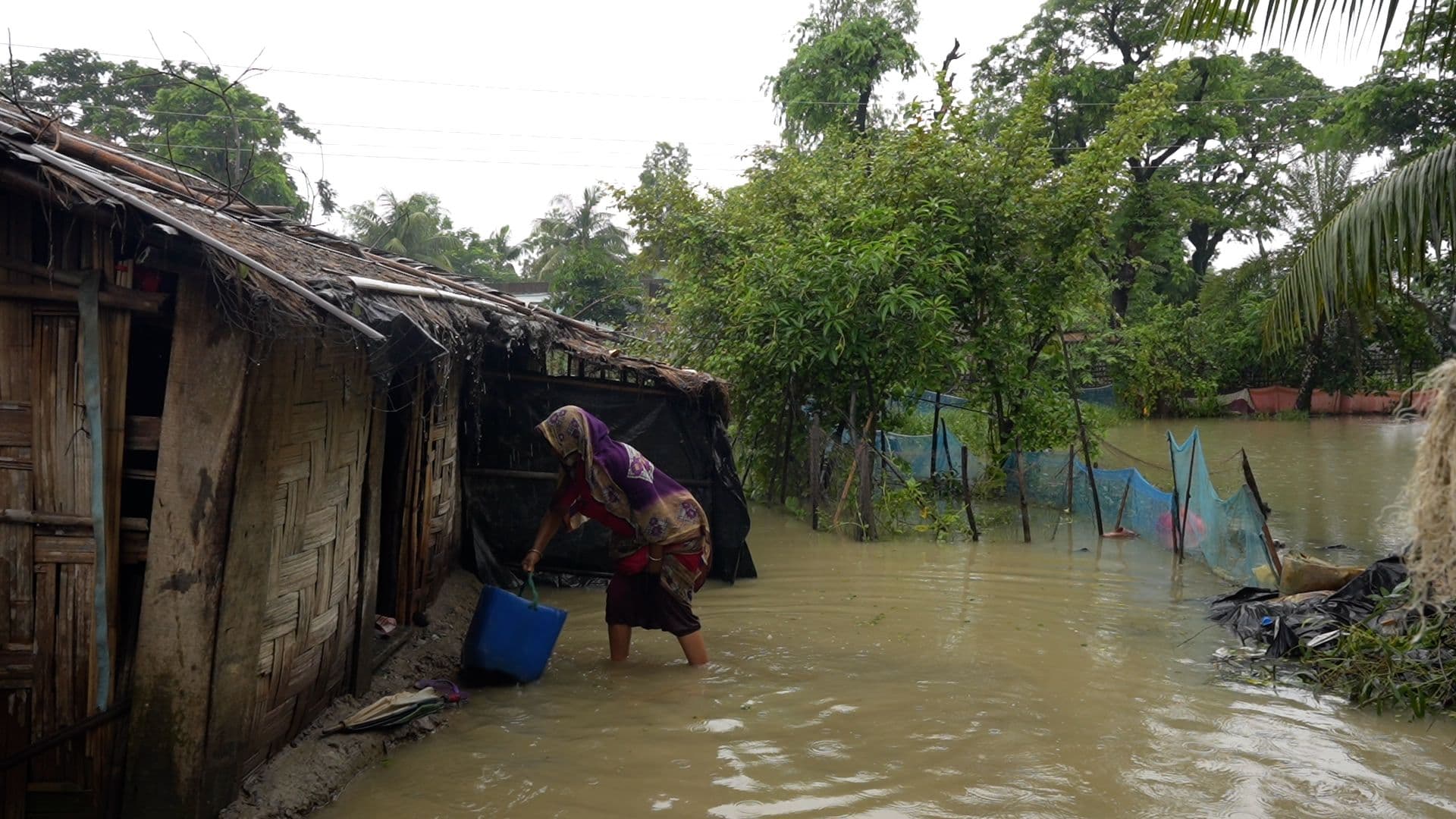
Mariam navigates floodwater outside her home in Pekua, where days of heavy rain left many families struggling to access basic necessities and continue their daily lives.
Many families remained in their damaged homes during the emergency. Community members said they were reluctant to move to the local cyclone shelter, which they described as being in a deteriorated condition.
“For the last three days, we have survived on rice and lentils,” Mariam said. “Only one meal a day.”
During the visit, two of her children lay asleep on a bed nearby. Mariam explained that hunger had become part of their daily reality.
“They cried for food all morning. Since we eat only once a day, they had rice and lentils at noon and then fell asleep. It is becoming a daily routine.”
Like many coastal communities in Pekua, families largely depend on daily wage labour, fishing, and salt cultivation. With floodwater remaining for days, many households lost their income and were forced to borrow money simply to meet their basic needs.
The floods have also intensified existing challenges around safe water and sanitation. Several households share communal latrines, and many families purchase drinking water because there is no tube well in the community. Flooding has further limited access to clean water and sanitation facilities, increasing health risks and making it difficult for women and girls to maintain privacy and dignity.
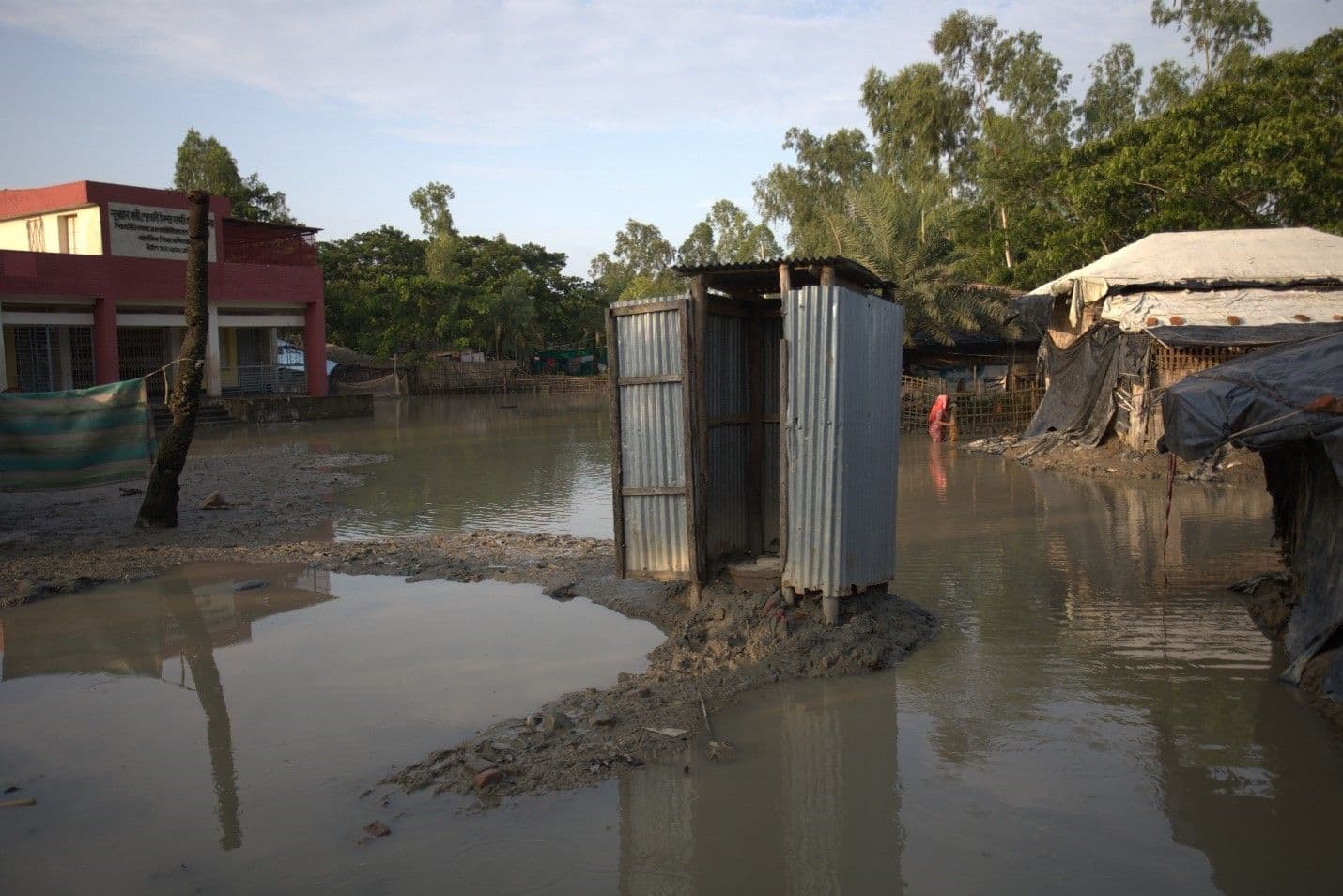
A communal latrine stands surrounded by floodwater in Pekua. Limited access to safe sanitation and clean water remains a major challenge for affected families.
“There is water everywhere, but not clean water that we can use,” Mariam explained. “Keeping the children clean and bathing them has become very difficult.”
Women in the community also spoke about overcrowded living conditions, concerns for children’s safety, and the challenges of accessing sanitation facilities, particularly at night. With homes surrounded by water and schools closed, many parents remain anxious about their children’s wellbeing.
Throughout the visit, Mariam spoke with a smile that seemed at odds with the difficulties surrounding her. As she described hunger, damaged walls, and uncertainty about the days ahead, she continued to speak warmly about her children. Behind that smile, however, was the weight of ensuring five children had enough to eat and a safe place to sleep.
Across Cox's Bazar's coastal communities, many families are facing similar struggles. In a region where flooding has become an almost annual reality, families are left wondering how many more times they can rebuild their homes, restore their livelihoods, and start over again.
For Mariam, and for countless women like her along this coast, this has become the seventh season, not marked on any calendar, but as predictable as the monsoon, and far harder to prepare for. It doesn't end when the floodwater recedes. It lingers in the debt still owed to a neighbour, in the children who ask when they'll eat again, in the quiet work of holding a family together with almost nothing.
*Name changed to protect identity.