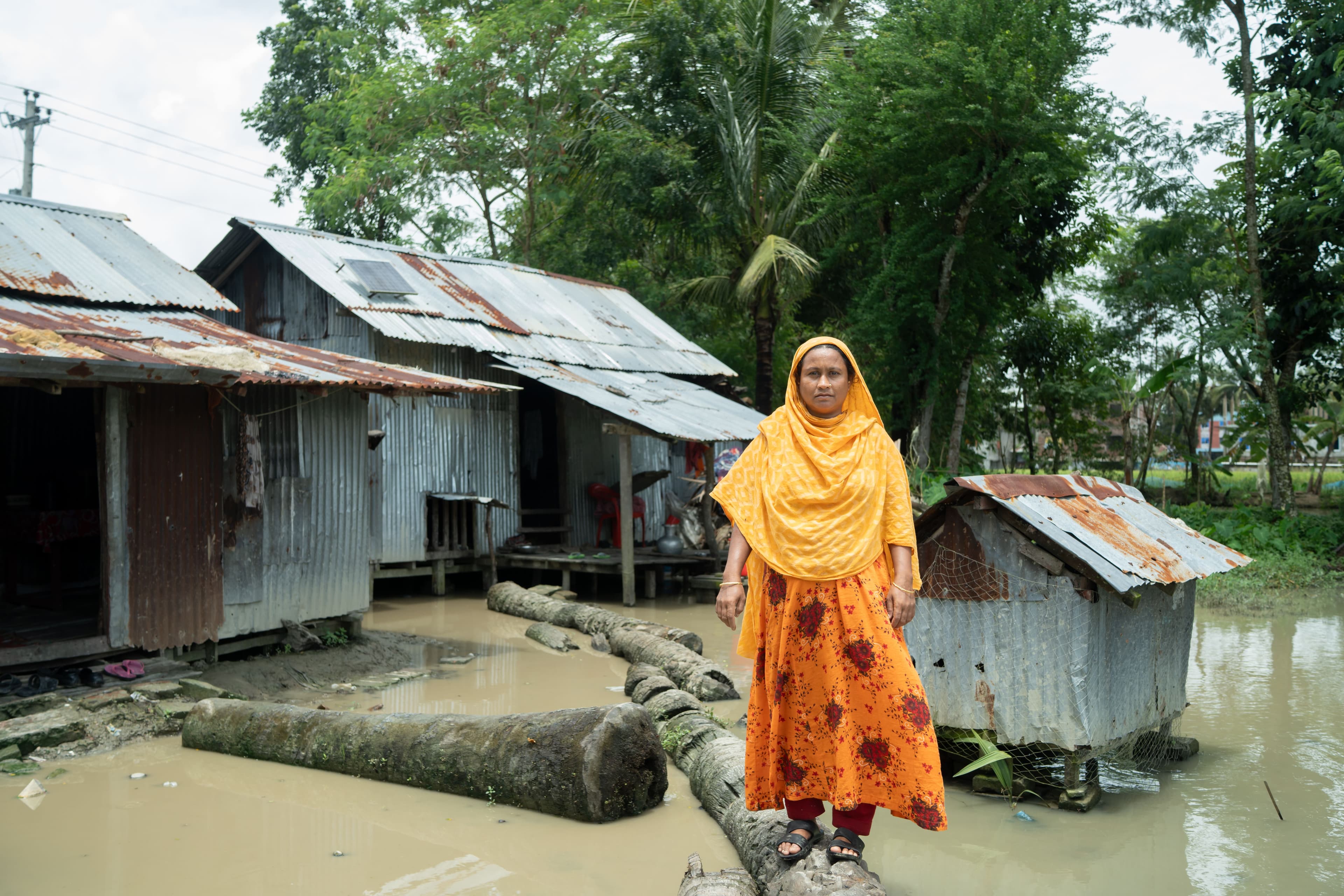
Floods are a familiar part of life in Pekua. Every year, families brace themselves for rising water, damaged homes, and disrupted livelihoods. But this year was different.
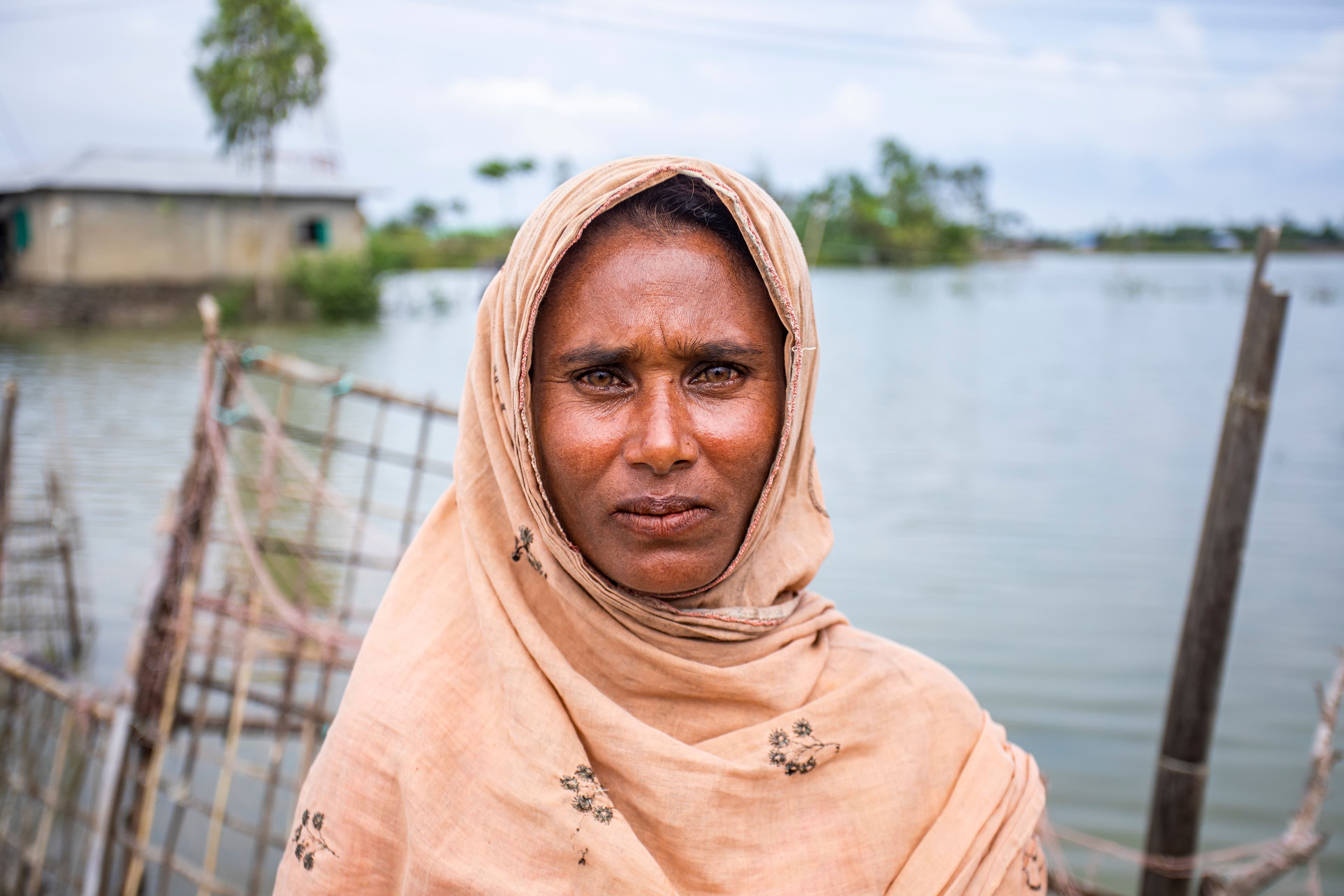
When floodwater began entering her home in the middle of the night, Murshida, a mother of five, quickly realised that this was not an ordinary flood. Within hours, water covered the floor, swallowed the courtyard, and surrounded the small house where her family had built their lives.
There was nowhere to go in the darkness.
As the water continued to rise, Murshida gathered her family onto a bed and waited. Through the long night, she sat awake, watching the water inch closer while silently praying that it would stop before dawn.
“I couldn't think of anything else,” she recalls. “I just prayed that the water would not rise any higher.”
For Murshida, the fear went far beyond losing her home.
Her husband survives on occasional alms and is speech-impaired and living with a mental disability. Two of their children are also speech-impaired. As floodwater surrounded their home, Murshida's greatest concern was keeping her family safe, especially those who could not fully understand the danger unfolding around them.
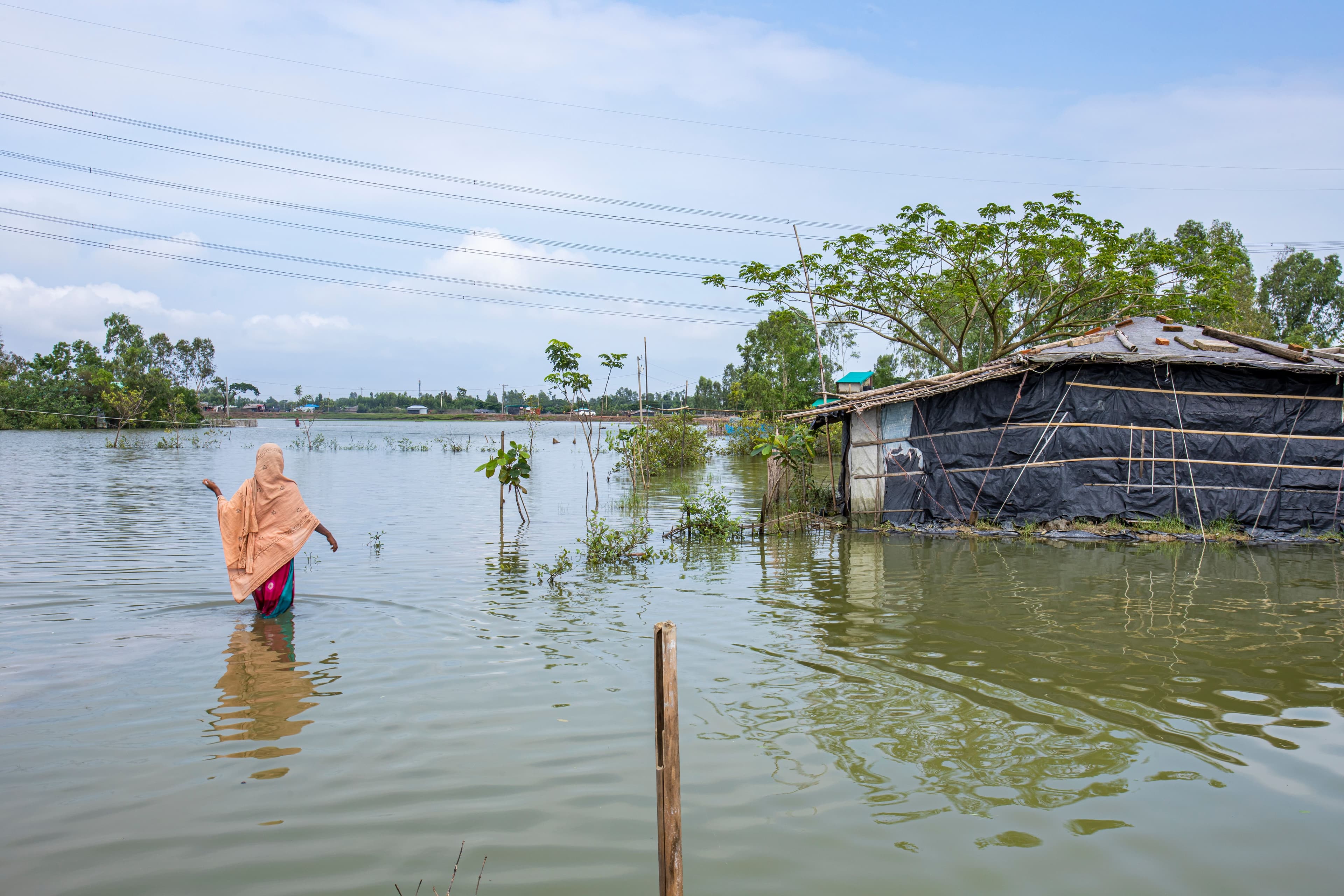
At first light, the family fled to her in-laws' house on slightly higher ground. But as the water continued to rise, they were forced to move again by afternoon, seeking refuge at her father's house on the other side of the embankment. Anticipating the worsening situation, Murshida had already sent her two children there earlier.
Even then, the fear did not disappear.
Although the water never entered her father's house, floodwater eventually reached the homestead, and accommodating seven additional family members for days became increasingly difficult. Some members of Murshida's family had to seek temporary shelter in neighbouring homes, relying on the generosity of relatives and neighbours to get through the crisis.
“I was terrified,” she says. “My husband and two children cannot swim. They needed constant attention. My family helped watch over them, but feeding everyone became another challenge.”
Like many flood-affected families, they soon found themselves struggling to secure enough food.
“We could somehow manage rice, but there was little else to eat,” she explains. “For several days, we ate rice with salt and leafy vegetables. Sometimes neighbours shared whatever they had. That is how we survived.”
Returning home brought little relief.
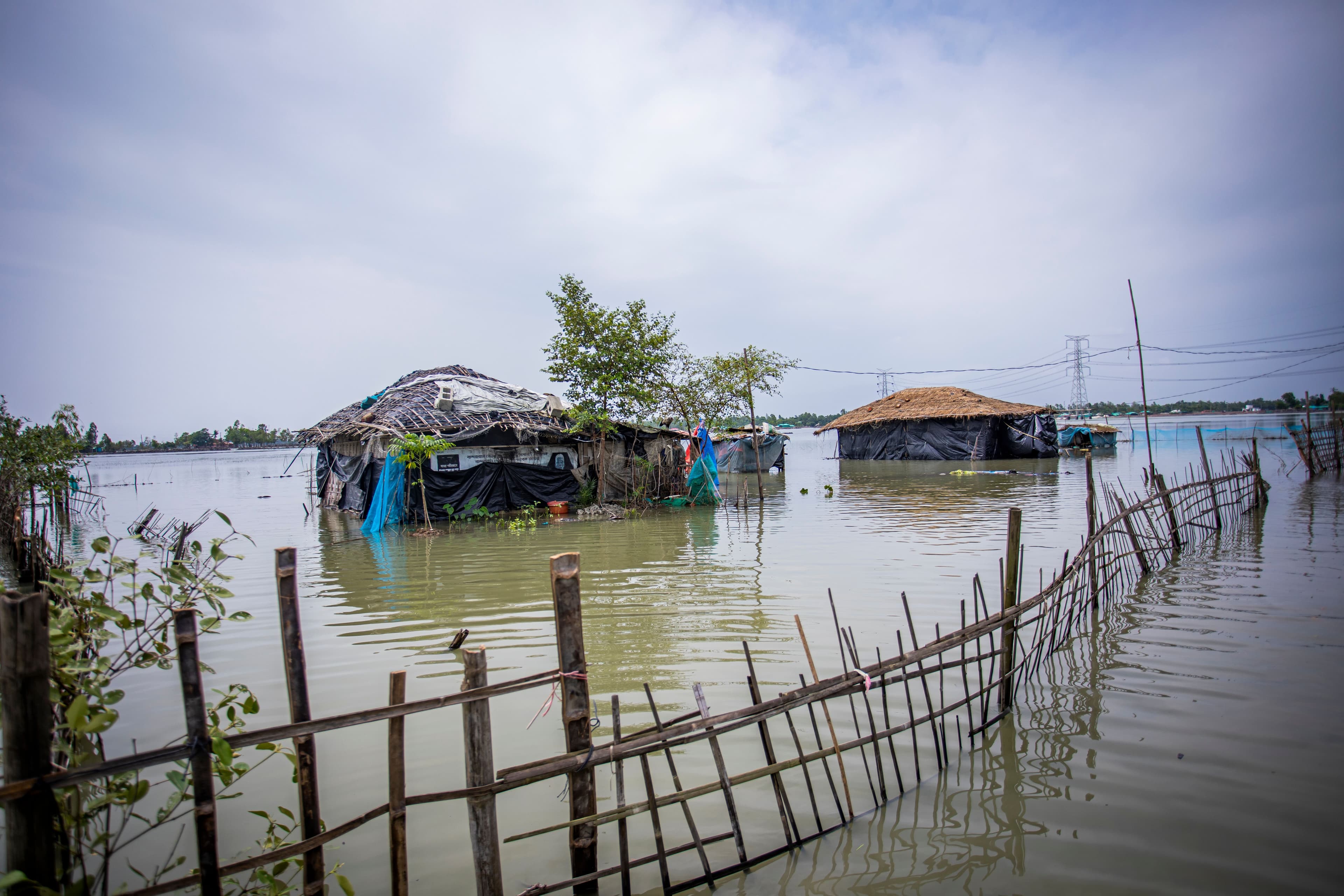
As the floodwater gradually receded, Murshida found that the crisis had not ended. The mud floor remained soaked, household belongings had been damaged by water, and parts of the fragile house had weakened after days of flooding. For a family already struggling to meet daily needs, repairing their home felt almost impossible.
“Everything was wet,” she recalls. “We did not know how we would repair the house when we could barely manage food.”
The flood did not only force Murshida from her home, it exposed the fragile reality she has been living with for years.
The family's only asset is a small homestead built on government-owned land. Leaving it permanently is not an option. If they move elsewhere, they risk losing the only place they can call home. Poverty, insecurity, and recurring climate shocks have become a constant backdrop to their lives.
Yet despite everything, Murshida refuses to give up.
Almost every year, floods, waterlogging, or other climate-related disasters force her family to start over. To support her family, she takes whatever work she can find—whether in nearby salt fields or as a domestic worker. Like many women in the community, she rebuilds her life one day at a time after each disaster.
Following the recent floods in Pekua, ActionAid Bangladesh provided emergency cash assistance of BDT 4,000 each to 450 flood-affected families, including Murshida's.
When asked what she would do first with the money, her answer came without hesitation.
“There wasn't enough food left at home for even one more meal,” she says. “Not a handful of rice remained. First, I will buy rice, lentils, and potatoes. I want my children to eat properly. It has been a long time since we had a full meal. Then I will use the remaining money to repair our house.”
Her wish is simple.
No grand ambitions. No impossible dreams.
Just enough food on the table, a safe roof overhead, and the chance to rebuild her family's life.
For Murshida, recovery begins with those small but essential steps, restoring dignity, rebuilding security, and holding on to the hope that better days are still possible.