From salinity in the coast to drought in the north, Bangladesh’s water crises demand more than one solution. Women are already leading the way policy must catch up.
In Bangladesh today, water defines inequality as much as it defines geography. For millions, it arrives either in excess, in absence, or in forms too unsafe to use. On World Water Day 2026, under the theme “Water and Gender”, Bangladesh offers a lesson of global relevance: water crises are never singular, and neither are their solutions. What is often missing is recognition of who is already leading responses on the ground.
The global figures remain sobering. More than 2.2 billion people lack safely managed drinking water, and 115 million rely on contaminated surface sources. These numbers mask deeper inequalities shaped by geography, climate, and gender. Across the global south, women and girls spend an estimated 200 million hours every day collecting water. In Bangladesh, that burden intensifies across diverse and fragile ecosystems.
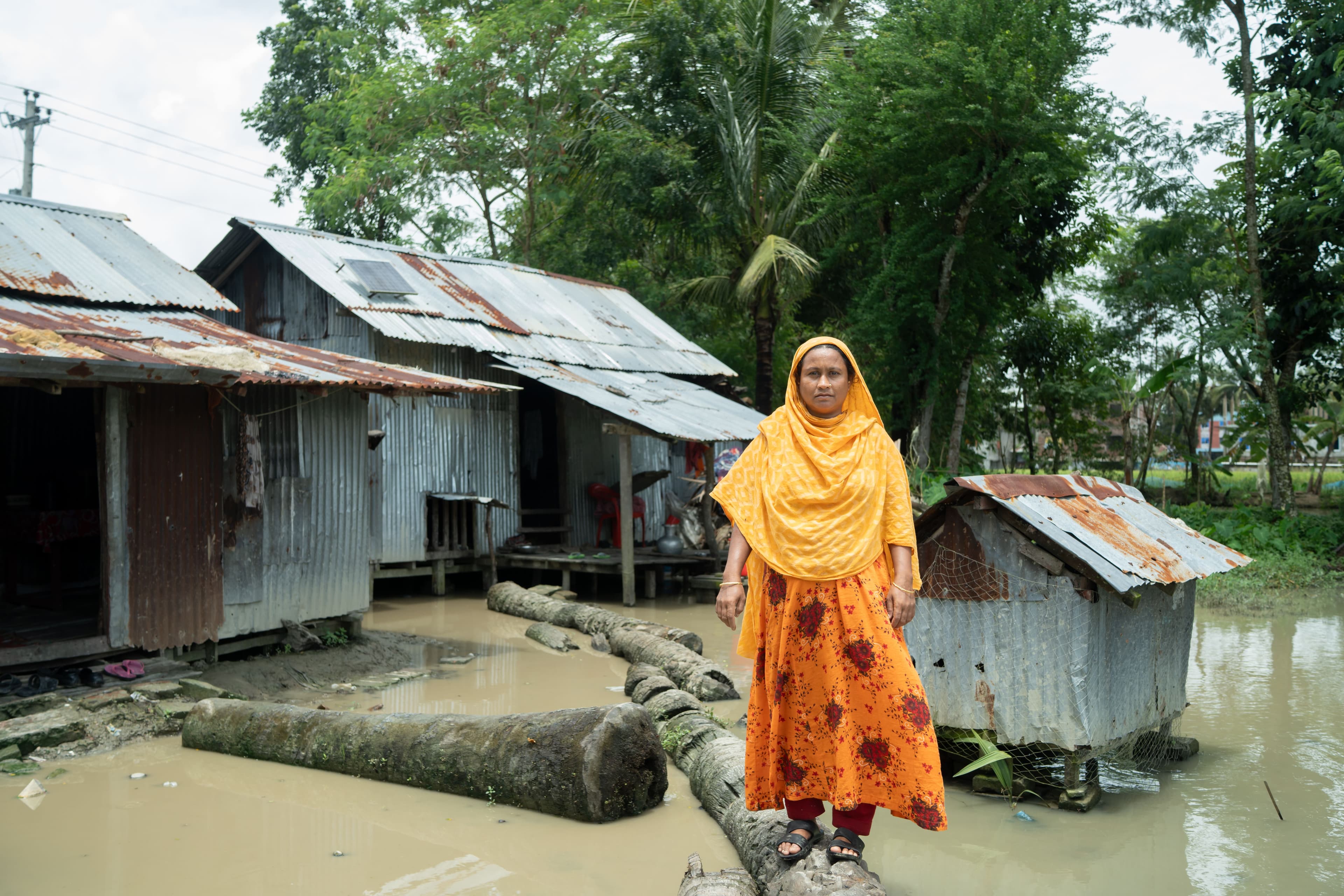
In the south-west coast, salinity intrusion has become a defining reality. Rising sea levels, reduced upstream freshwater flow, and increasingly intense storm surges have pushed saltwater inland, contaminating ponds, rivers, and groundwater. More than 20 million people are affected. Safe drinking water is often miles away, and it is women who walk those miles—balancing physical strain with unpaid care responsibilities, often at the cost of their health and livelihoods.
Yet in the north-western districts, the crisis takes a different form. Here, drought and water scarcity dominate. Groundwater levels are falling due to over-extraction for irrigation, while erratic rainfall patterns disrupt agricultural cycles. For farming communities, uncertainty is growing; for women, deeply involved in both household water management and agriculture, the risks are compounded.
Elsewhere, in floodplains and urban centers, excess water becomes the problem. Seasonal floods displace communities and destroy crops, while cities like Dhaka struggle with waterlogging and pollution. What emerges across Bangladesh is not one water crisis, but many each requiring a distinct response.
And yet, policy responses too often remain uniform.
A single, centralised approach to water governance cannot address such ecological diversity. Coastal salinity, northern drought, and urban flooding demand different strategies, technologies, and governance models. Recognising this is the first step towards meaningful reform.
The second is recognising leadership, especially that of women.
Across Bangladesh, women are already managing water in conditions of scarcity and uncertainty. In coastal areas, they develop systems to store and ration safe water. In drought-prone regions, they adapt farming practices and manage household consumption with precision. These are acts of leadership, yet they remain largely invisible in formal policy and planning.
Embedding women’s leadership into water governance through local committees, user groups, and national frameworks is simply not a matter of inclusion. It is essential for effectiveness. Water systems are more sustainable and equitable when women have real decision-making power.
This is not theoretical. Through programmes led by ActionAid Bangladesh, women in coastal communities have organised water user groups to manage shared ponds and rainwater harvesting systems, reducing the time spent collecting water and improving access to safe drinking sources. In drought-prone areas, women supported through community initiatives have adopted climate-resilient agricultural practices and small-scale water conservation techniques, helping households sustain livelihoods despite declining groundwater. These examples show that when women are resourced and trusted, they transform not only water access but community resilience.
At the same time, Bangladesh must confront the growing intersection between water and energy. Global instability, particularly in west Asia, has driven up fuel costs, increasing the price of water extraction, treatment, and distribution. Diesel-powered irrigation and pumping systems are becoming economically and environmentally unsustainable.
The transition to renewable energy offers a way forward. Solar-powered irrigation, decentralised water systems, and small-scale hydropower can reduce dependence on volatile energy markets while improving access. When these systems are designed and managed locally particularly by women they deliver both resilience and equity.
Nature-based solutions must also be central to this transition. From mangrove restoration in coastal areas to wetland conservation in flood-prone regions, these approaches offer sustainable ways to manage water. Healthy ecosystems can buffer storm surges, reduce salinity intrusion, store excess rainfall, and recharge groundwater. For Bangladesh, investing in nature is not optional—it is essential.
The urgency of action is intensifying.
Bangladesh is already experiencing more frequent and severe heatwaves, a trend expected to worsen with the climate crisis. Rising temperatures will increase water demand, accelerate evaporation, and place additional stress on already fragile systems. Combined with seasonal northwesterly storms that bring intense rainfall, the country faces a volatile cycle of extremes.
This demands immediate and coordinated action at the highest level. The prime minister and the minister for environment and climate change must prioritise a comprehensive and differentiated water strategy that reflects the country’s ecological realities.
In the short term, this includes scaling up rainwater harvesting across households, schools, and urban infrastructure. Capturing seasonal rainfall that would otherwise be lost to runoff can ease both flooding and scarcity. Integrating these systems with ongoing canal restoration efforts can significantly improve water storage and distribution. Strengthening storm preparedness, maintaining drainage systems, and supporting community-led responses are equally critical.
In the long term, Bangladesh must invest in an integrated water governance framework that aligns climate adaptation, energy transition, and social equity. This means scaling renewable energy solutions for water systems, strengthening transboundary water cooperation, and ensuring policies are tailored to the specific needs of coastal, drought-prone, and flood-affected regions.
Crucially, it means placing women at the centre of decision-making.
The stakes are high. Without decisive action, water insecurity will deepen inequality, drive displacement, and undermine development gains. But with the right approach, water can become a source of resilience and cooperation.
Bangladesh has the knowledge, experience, and leadership much of it already in the hands of women.
The task now is to recognise it, invest in it, and act with urgency. This requires leadership at the highest level. The prime minister must bring together the ministries responsible for water, environment, forests, and climate change under a coordinated national framework, backed by clear plans and dedicated budget allocations. Without alignment and financing, even the best policies will fall short.
Only then can Bangladesh build a future where water is not a source of crisis, but a foundation for justice.
Farah Kabir Country Director, ActionAid Bangladesh