Strengthening People's Safeguard to Protect Land Rights of Marginalized Community: Phase ll
 Location:Matarbari, Moheshkhali, Cox’s Bazar Sadar, Kolapara (Payra), Bagerhat Sadar, Rampal
To build a uniform & comprehensive power and energy policy through transforming its value chain to increase dependence on renewable/green instead of fossil fuel/coal with safeguard regulations for large-scale infrastructure development projects to ensure social and environmental justice.
Objectives
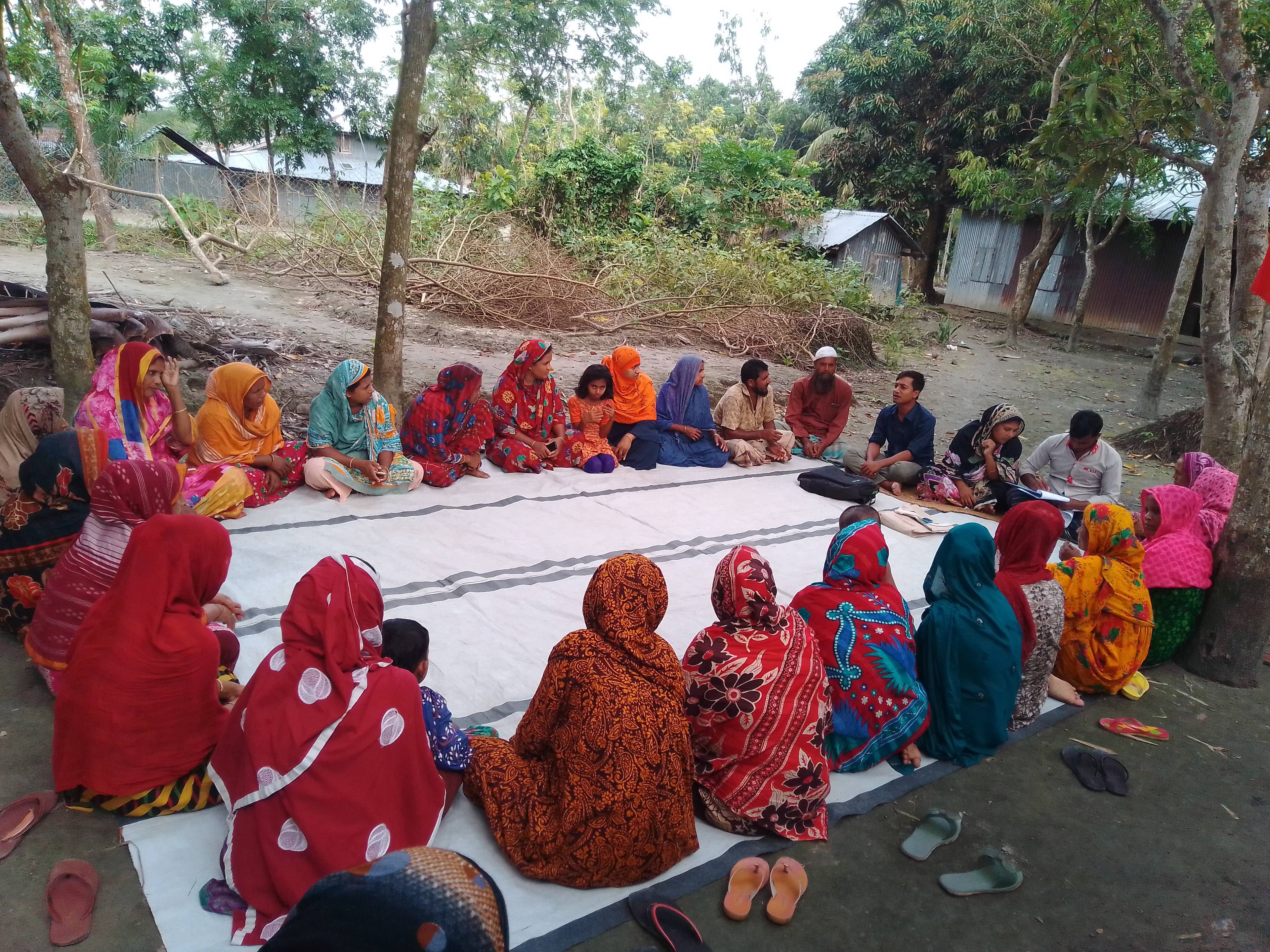
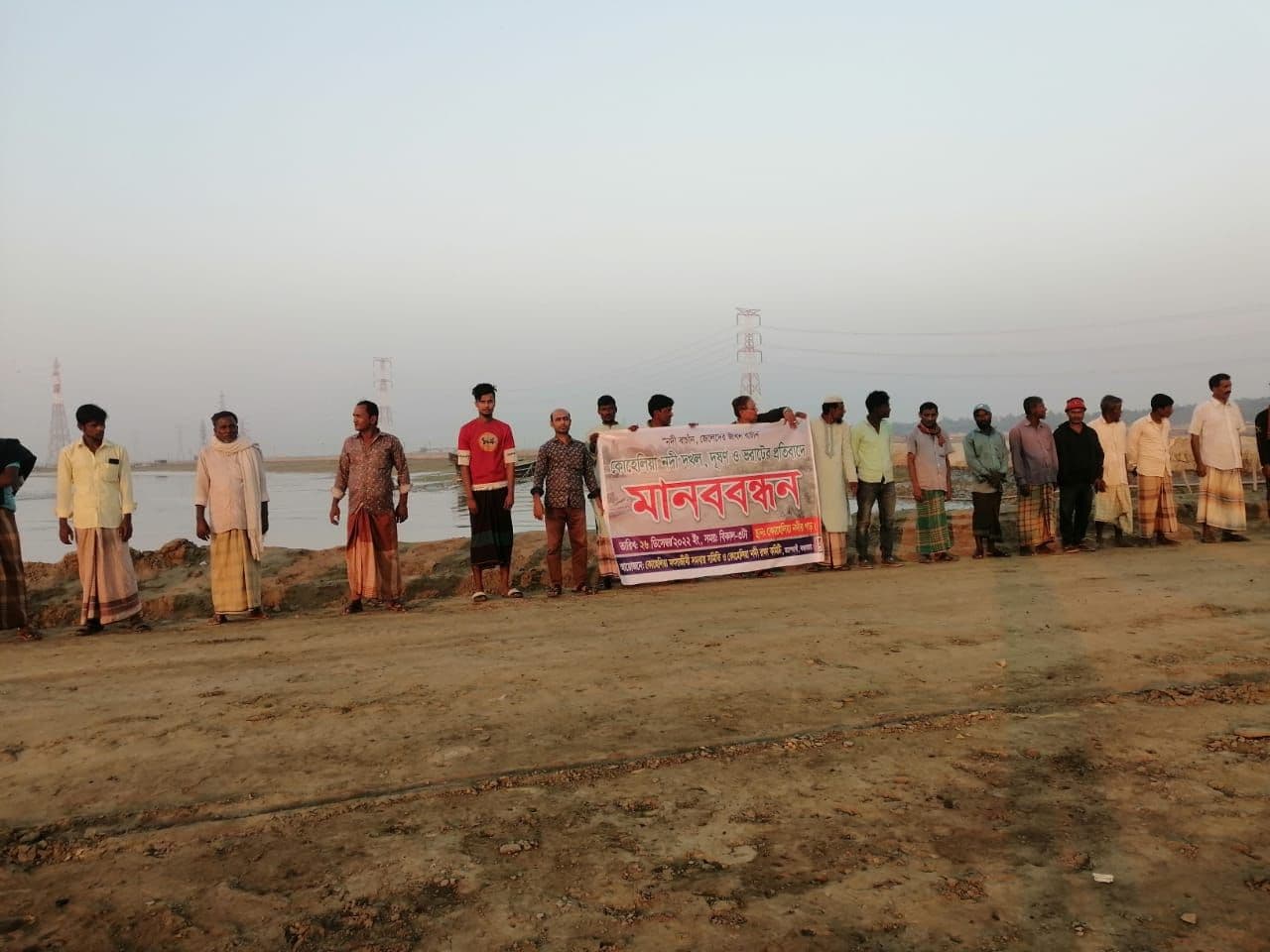
-To create an enabling environment for civil society and human rights defenders to protect the affected communities from the negative impact of energy sector infrastructural development projects and violations of human rights and environmental rights.
-To advocate for reform of the laws, policies, mechanisms and plans related energy sector to develop a fair and green trade and value chain in the energy sector.
Achievements and Contribution
2022
-Japan International Cooperation Agency (JICA) withdrew its investment from the Matarbari 1200MW coal power plant (Phase II).
-The government decided to cancel the construction of a 3.6 GW LNG-fired power plant and LNG terminal at Payra in Patuakhali.
2023
-The Bangladeshi government formed a parliamentary standing committee and a dedicated sub-committee under the Ministry of Power, Energy and Mineral Resources to promote renewable energy expansion and achieve energy prosperity by 2041.
-Policymakers committed to adopting recommendations from the Democratic Budget Movement Conference to transition toward a green economy and strengthen social security.
-During the Regional Climate Summit in Dhaka, the State Minister for Power, Energy and Mineral Resources stated that Bangladesh already has a strong investment pipeline and does not need to sign additional energy treaties, including the ECT.
-Policymakers, including MPs, the Prime Minister’s special envoy on climate change, and members of the Bangladesh Parliamentarians' Caucus on Migration and Development, advocated for the inclusion of migrant workers’ rights in the UNLBI at regional consultations in Jakarta and Dhaka, influencing the South Asian Forum to include the issue in its agenda. This advocacy led the special envoy to promote the cause at COP28.
2024
-The Advisory Council gave final approval to permanently repeal the Quick Enhancement of Electricity and Energy (Special Provisions) Act (QEEES Act), commonly known as the indemnity act for the energy sector.
-The interim government formed a five-member national committee to review deals made under the controversial QEEES Act. On November 14, 2024, the High Court of Bangladesh declared Section 9 of the Act, which provided immunity, as illegal and unconstitutional.
-A gazette issued by the Ministry of Law, Justice and Parliamentary Affairs announced the abolition of Section 34Ka of the Bangladesh Energy Regulatory Commission Act 2003 (BERC Act 2003).
-A national alliance of 130 organizations was launched under the name Just Energy Transition Network Bangladesh (JETnet-BD) to accelerate advocacy for a shift from fossil fuels to renewable energy.
-The CSO-proposed National Energy Transition Policy (NETP) was revised based on recommendations from the State Minister of Power, Energy and Mineral Resources. On August 28, 2024, during a lobbying session with Energy Advisor H.E. Fouzul Kabir Khan and partner CAB, copies of the revised policy were handed over, and the need for an integrated energy policy was discussed.
-The Asian Development Bank (ADB) adopted CSO recommendations into its Environmental and Social Framework (ESF), introducing improvements such as enhanced transparency, stronger policy language, a new climate standard, a ban on asbestos, and recognition of informal workers' rights.
2025
-The government cancelled the land allocation for Orion Group’s proposed 635 MW power plant in Matarbari.
-RE policy 2025 was approved by government of Bangladesh
-The Government of Bangladesh set a target to generate 3,000 MW of solar energy from institutional rooftops by 2025, a significant policy shift at the national level.
-The Government of Bangladesh approved and published a new Policy for Enhancement of Private Participation in Renewable Energy-Based Power Generation, 2025. Under the new policy, private investors are now allowed to establish renewable energy-based power plants, directly select their customers, negotiate electricity prices, and access the national grid for power distribution, effectively removing the Power Development Board (PDB) as the exclusive intermediary in buying and selling electricity.
Target Groups

Female

Male

Community Land Rights Group (CLRG)
Impact Stories
Featured News
Project Gallery