SHOMBHABONA: Accelerating Action To End Child Marriage (Phase II)
 Location:Jamalpur, Gaibandha, Noakhali, Bagerhat, and Chapainawabganj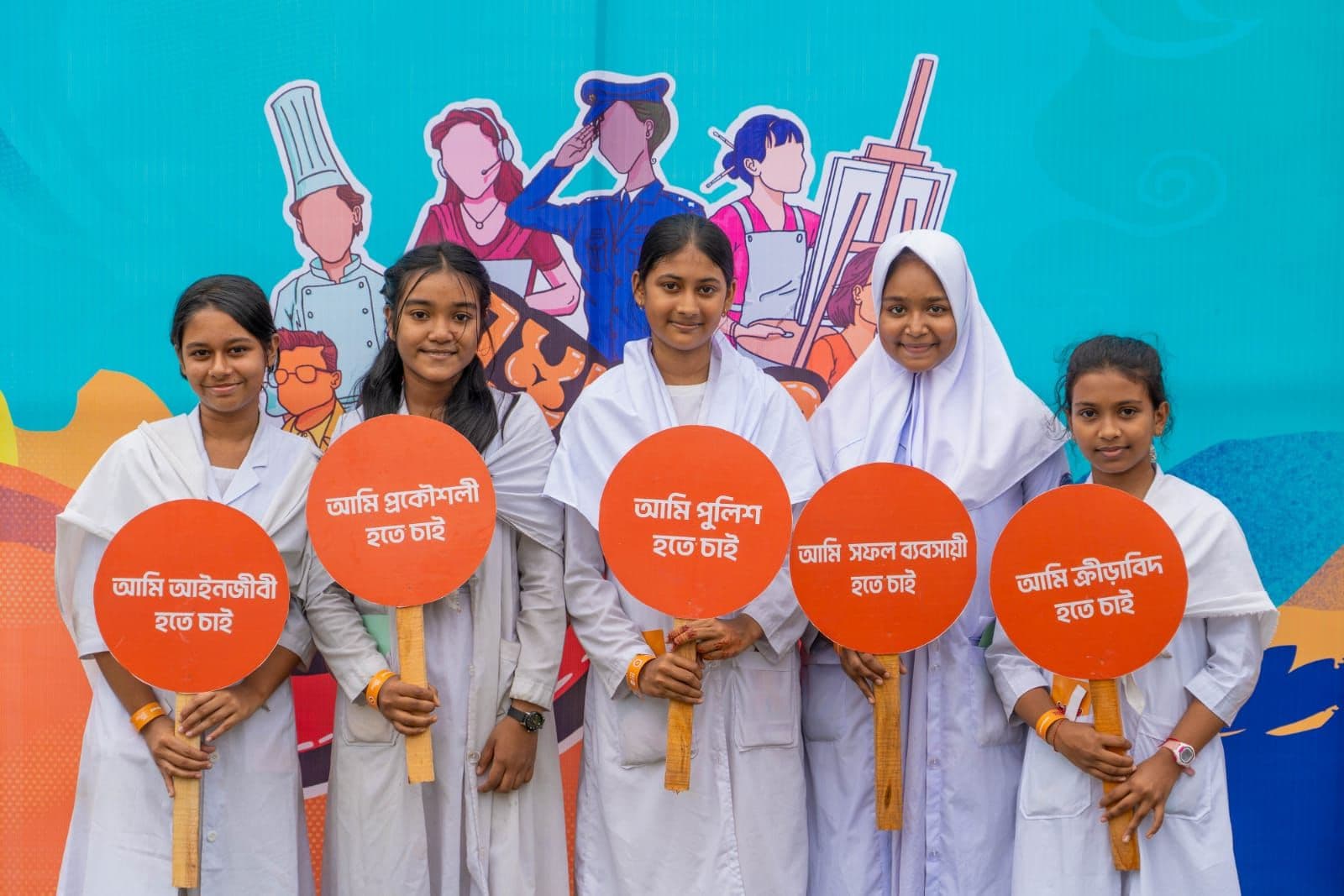
SHOMBHABONA is a transformative initiative that embodies a critical paradigm shift from project-based to systems-based action to end child marriage in Bangladesh. Implemented by ActionAid Bangladesh with support from UNFPA Bangladesh, SHOMBHABONA operates across Jamalpur, Gaibandha, Noakhali, Bagerhat, and Chapainawabganj under Accelerating Action to End Child Marriage (Phase II) positioning adolescent girls as empowered right holders at the center of change. Grounded in a ‘Whole of Society’ approach, the initiative moves beyond isolated interventions to confront the deep-rooted social, cultural, and structural drivers that perpetuate child marriage, cultivating an enabling ecosystem where every girl can exercise choice, dignity, and agency to shape her own future.
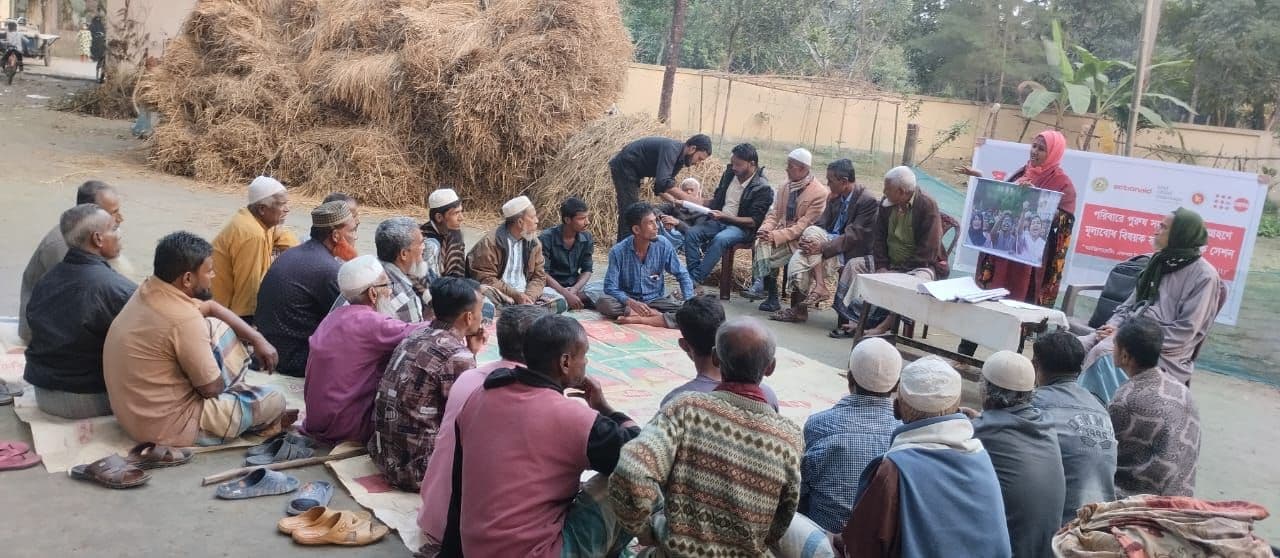
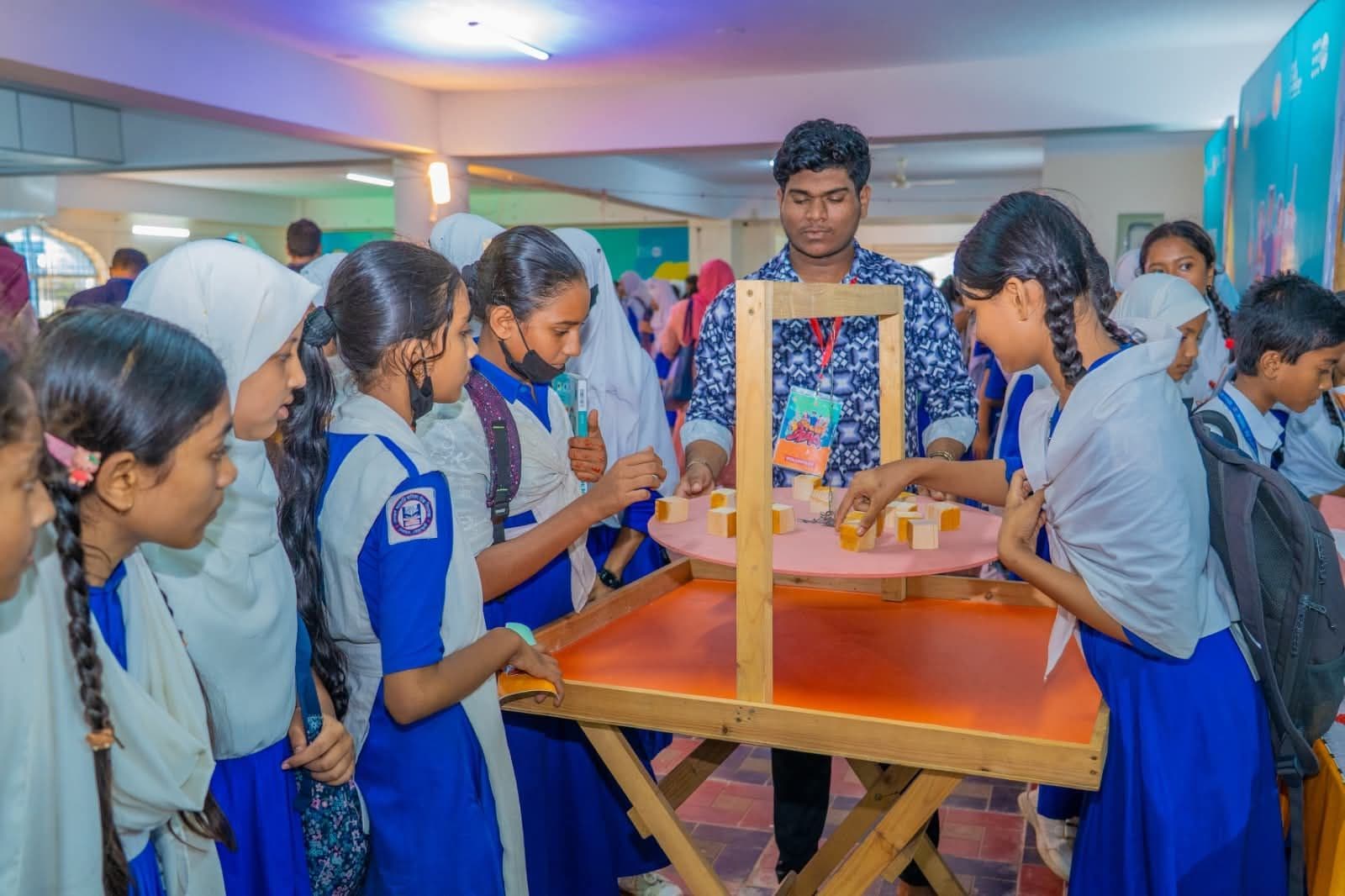
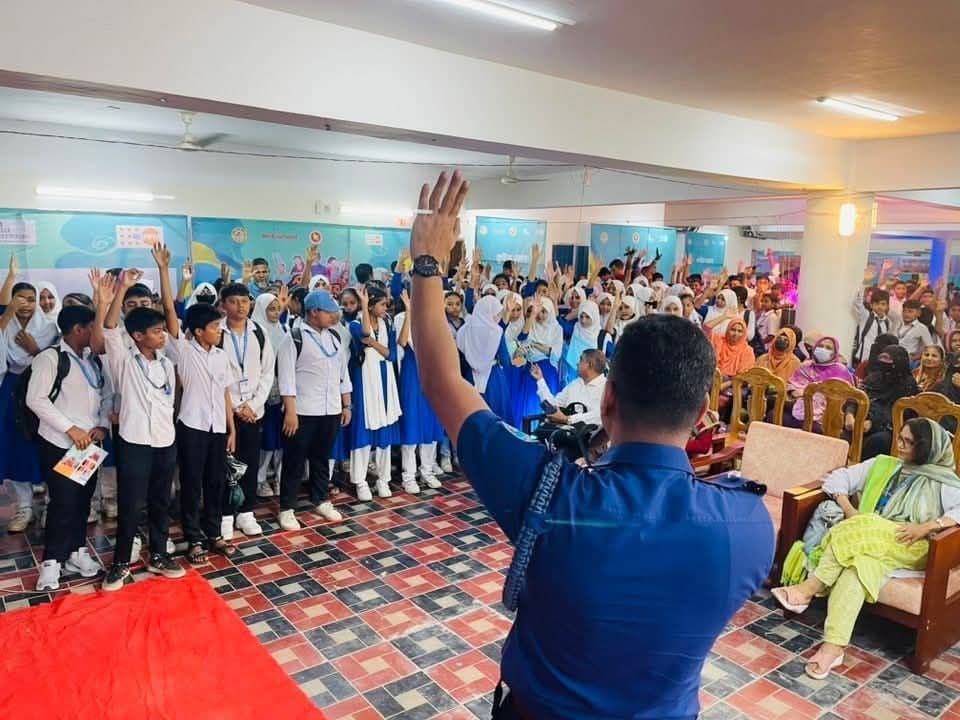
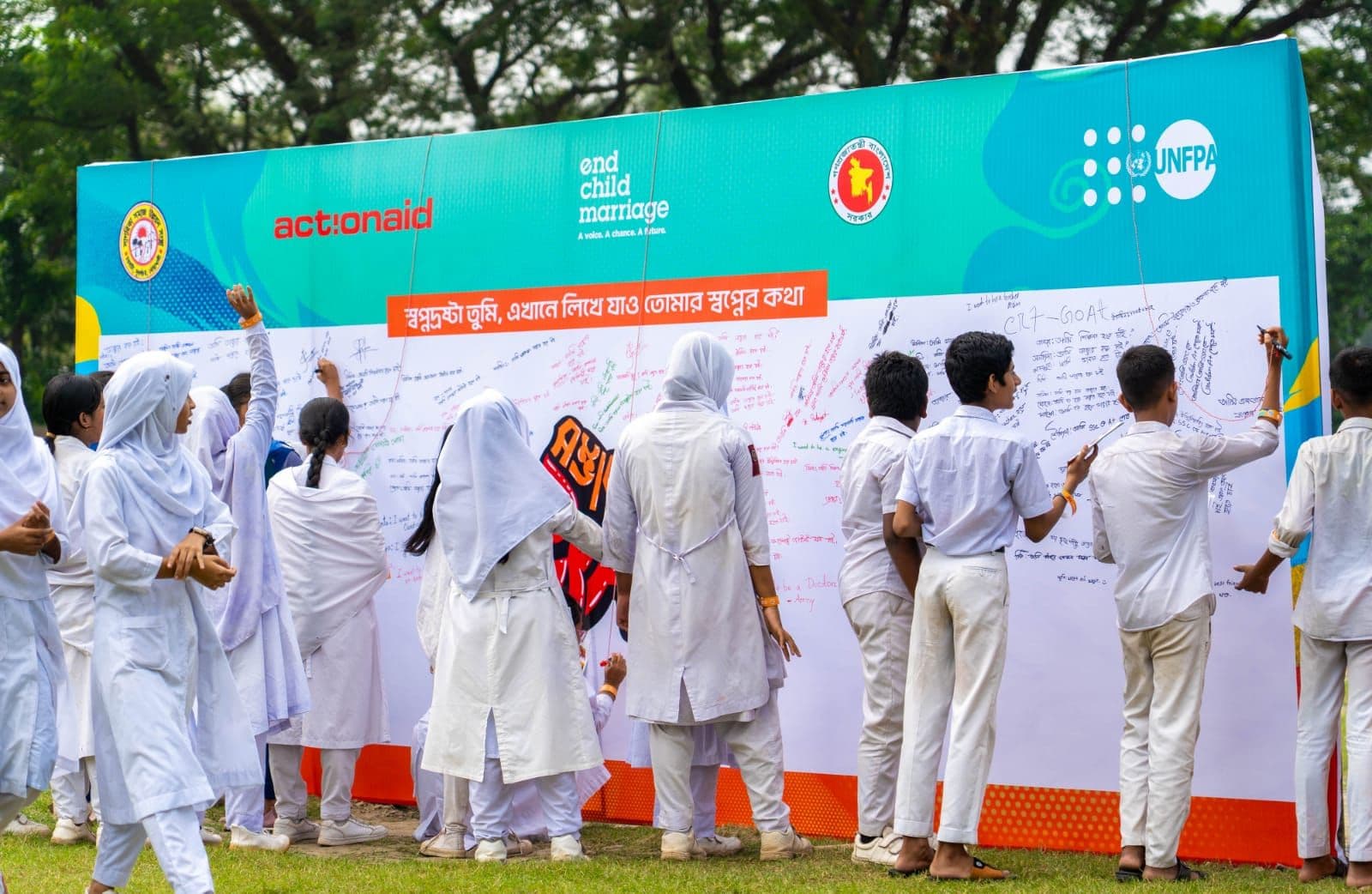
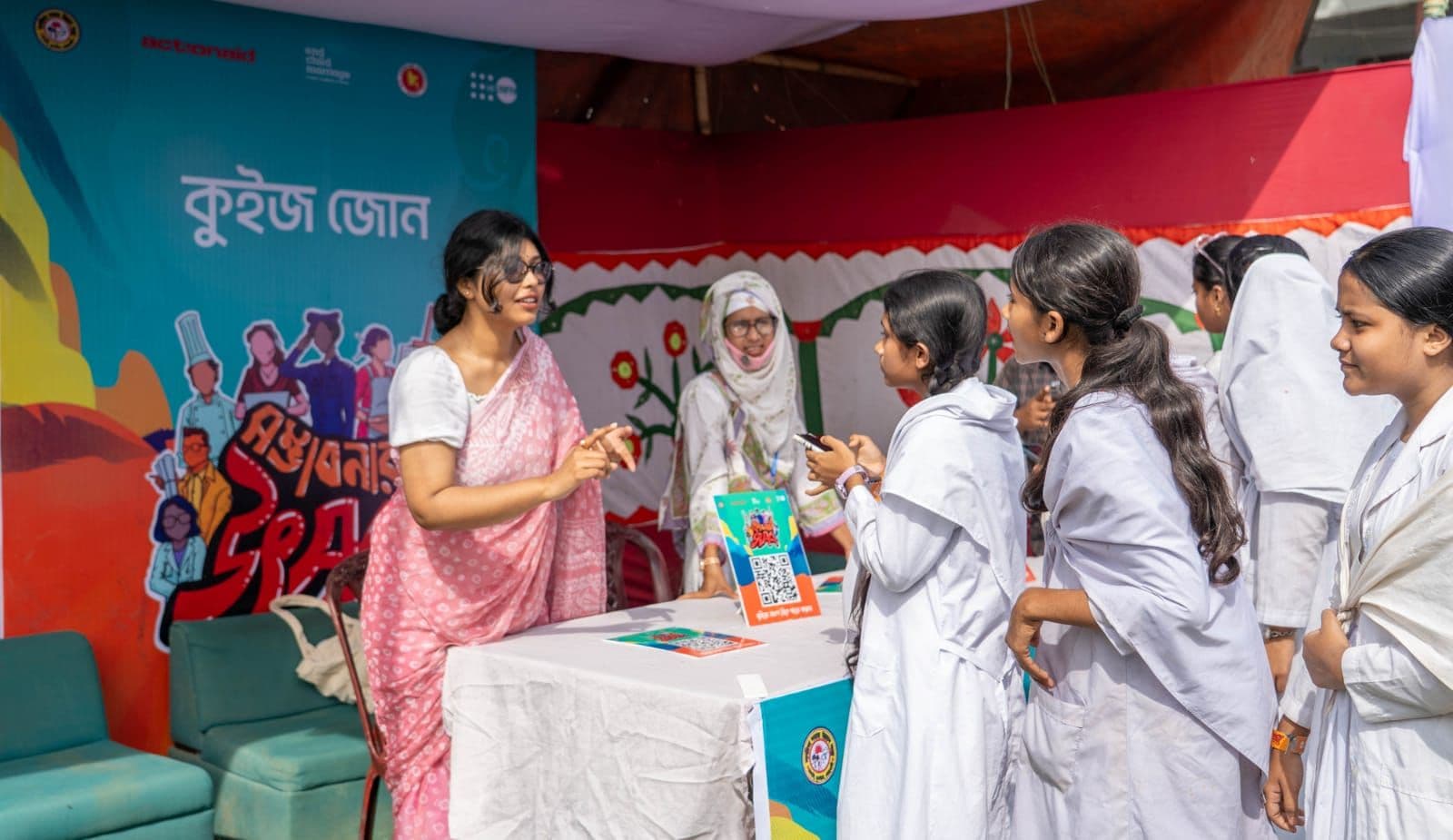
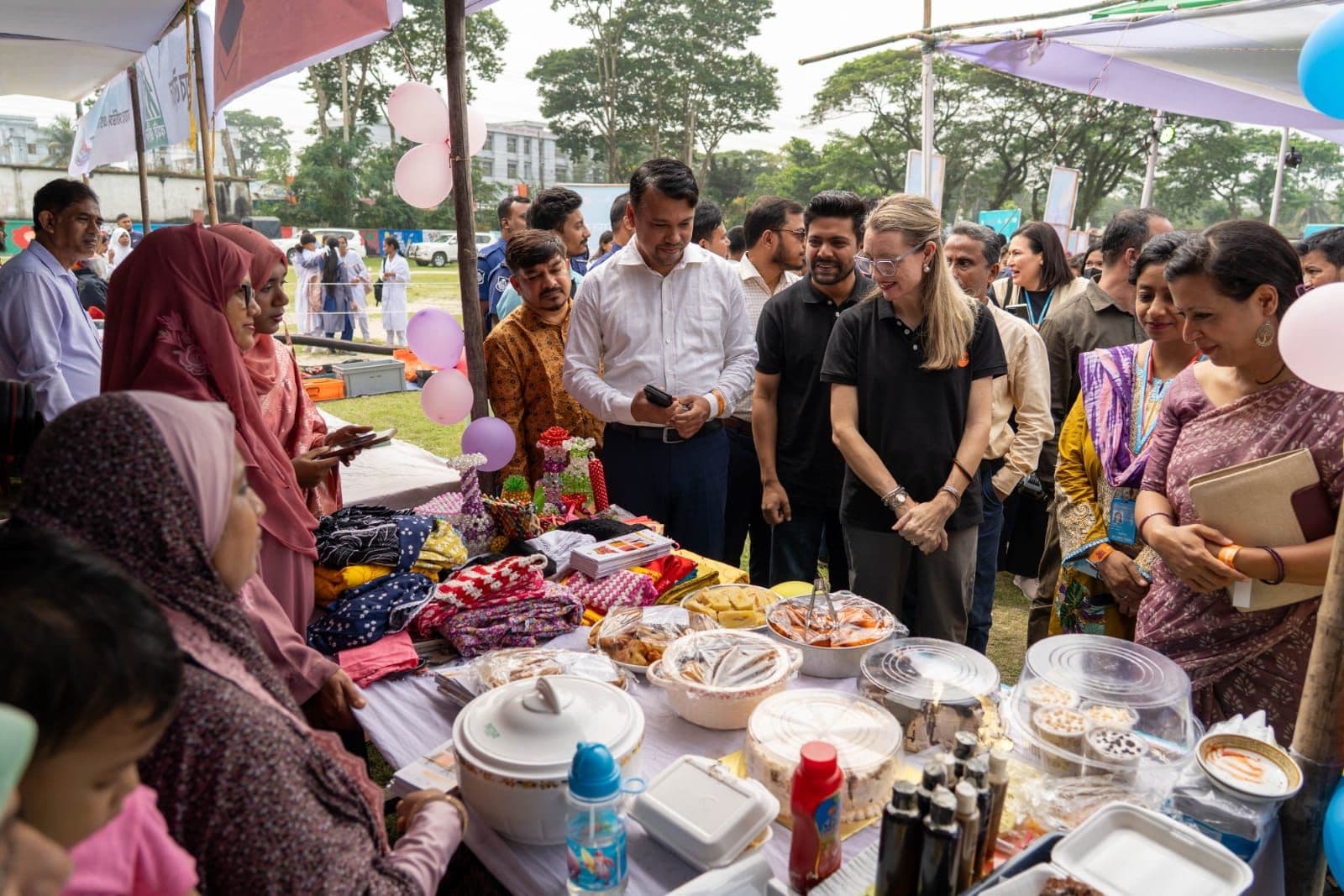
At the community level, SHOMBHABONA engages fathers and male guardians through reflective value deliberation sessions that promote positive masculinities. By encouraging men to shift from norms of control toward roles of protection, care, and guidance, the initiative fosters supportive environments where girls’ education, wellbeing, and agency are prioritised. Recognising the influence of social gatekeepers, SHOMBHABONA actively engages reference groups such as matchmakers as ethical actors committed to refusing underage marriages, verifying legal documentation, and upholding children’s rights. Its flagship intervention, Shombhabonar Utshob (Career Festival), creates aspirational spaces where girls, parents, teachers and community members explore diverse education-to-career pathways. By showcasing female role models and promoting informed decision-making, the festival redefines girls not as future brides but as architects of their futures.
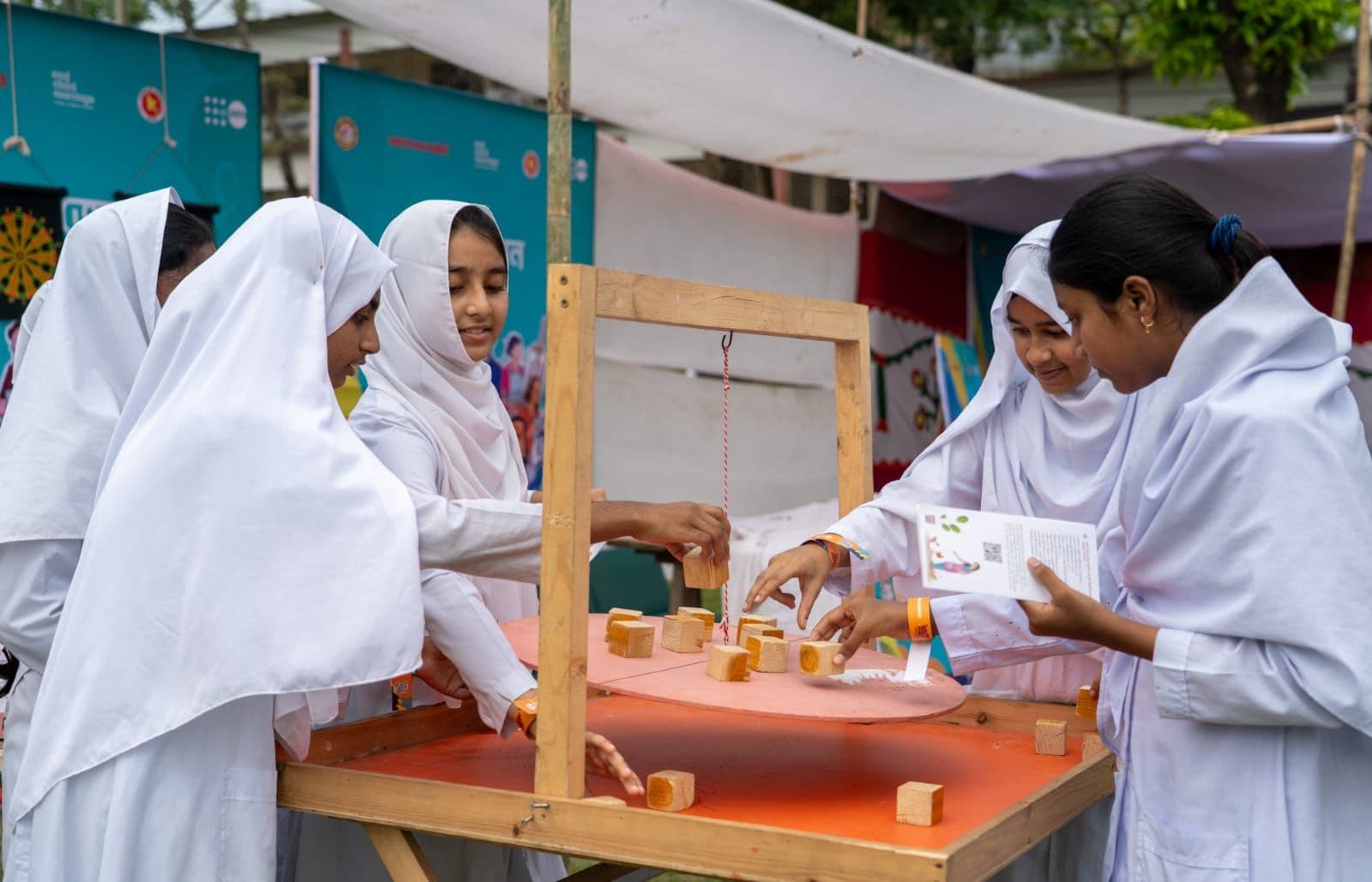
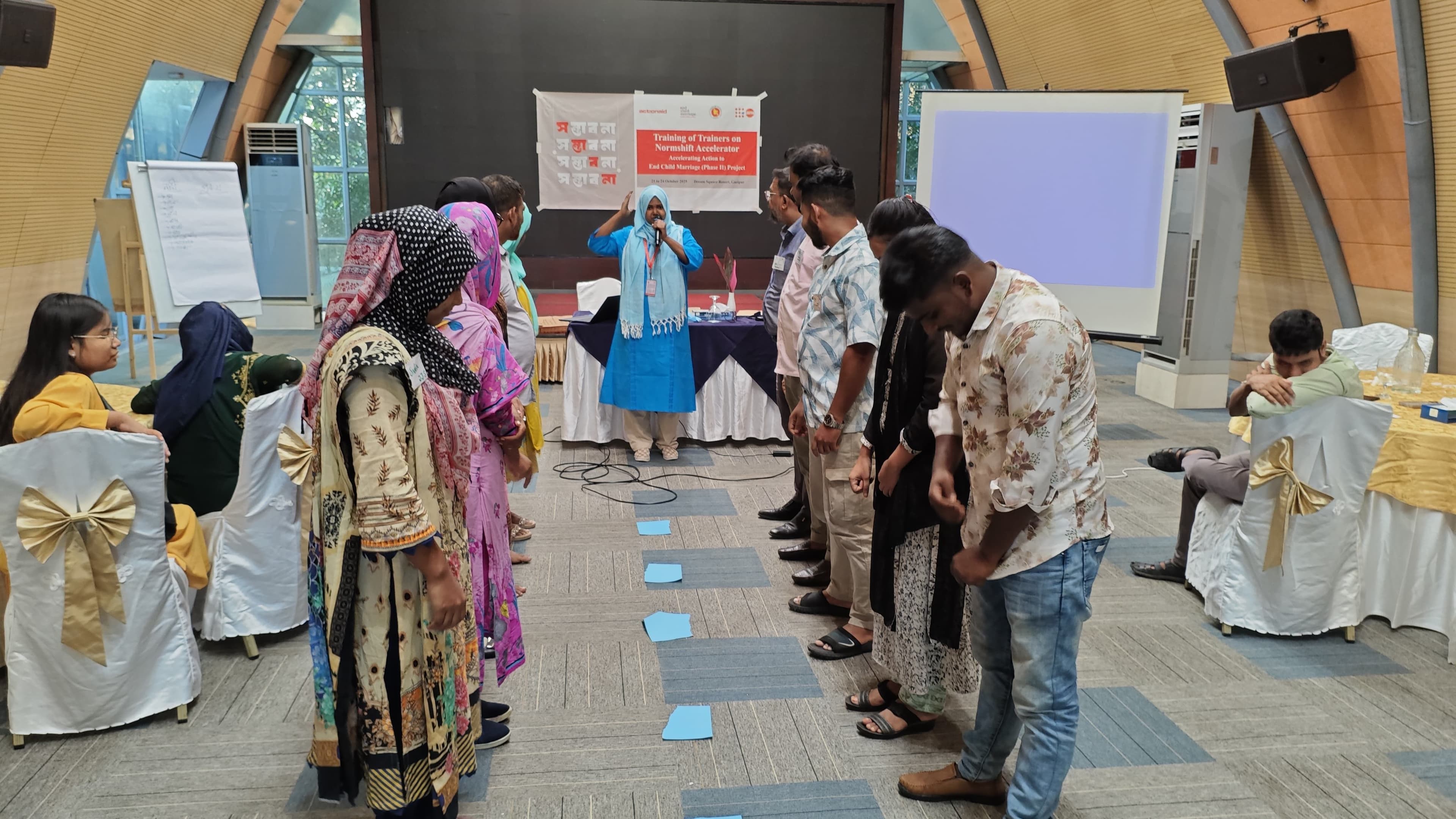
The initiative also invests in youth leadership, empowering Youth Ambassadors to drive community mobilisation and spearhead a youth-led movement against child marriage and gender-based violence. To ensure norm diffusion at scale, SHOMBHABONA strengthens journalists’ capacity for ethical, evidence-based reporting and supports civil society organisations to advocate for a rights-based legal and policy environment. Together, these interconnected strategies convert information into cognition, catalysing lasting social transformation and advancing a future free from child marriage.
Project Key Outputs
Strengthened Community Norms Against Child Marriage: A total of 130 value deliberation sessions were conducted, directly reaching 3,824 individuals, including 3,169 males, 600 females, 34 girls and 21 boys. These sessions actively engaged fathers, male guardians and women to challenge harmful gender and social norms, contributing to increased community-level prevention and resistance to child marriage through measurable shifts in attitudes and practices.
Empowered Adolescents and Youth Leadership: A training session was conducted, reaching 30 participants, including 12 males and 18 females. Through this initiative, Youth Ambassadors were equipped to lead peer engagement, community dialogue and advocacy actions, strengthening youth-led social movements by promoting gender-equitable behaviors, amplifying adolescent voices and fostering greater community ownership.
Ethical Engagement of Reference Groups: 40 sessions were conducted, engaging 493 individuals, including 318 males and 175 females. This initiative mobilized matchmakers and religious leaders as key agents of change, contributing to the prevention of 35 child marriages, including 31 cases in Dewanganj and Islampur, 2 in Chapainawabganj and 2 in Bagerhat, reinforcing community-based accountability and ethical leadership in addressing child marriage.
Enhanced Aspirations and Education-to-Career Pathways for Girls: 4 career festivals and community outreach events were organised, reaching a total of 1,497 individuals, including 261 males, 179 females, 686 girls and 371 boys. These initiatives promoted education and livelihood pathways as viable alternatives to early marriage, contributing to improved informed decision-making among adolescents and parents, with increased aspirations toward continued education and career development.
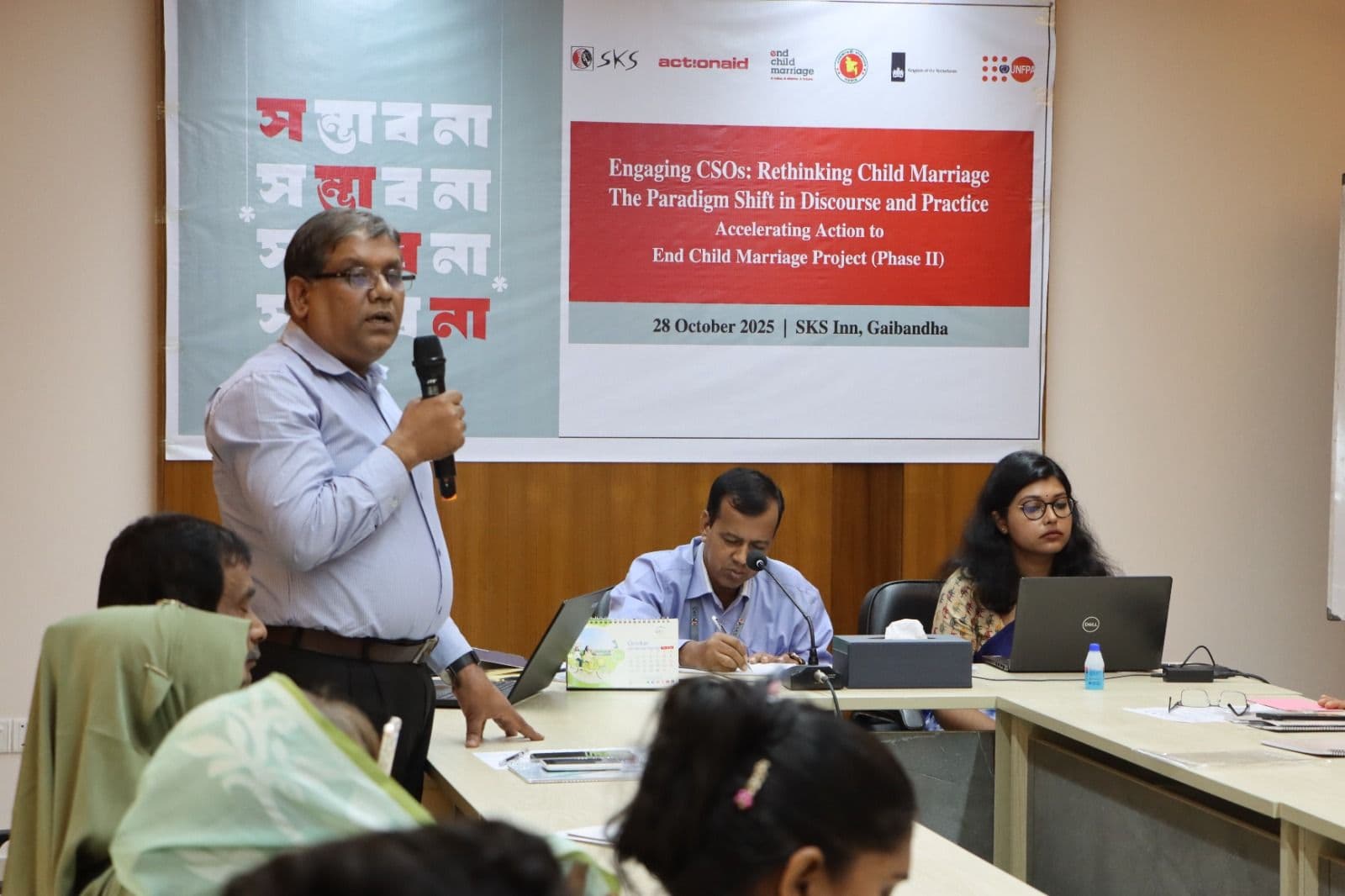
Strengthened Enabling Environment and Public Discourse: A total of 7 capacity-building workshops were conducted, including 5 CSO workshops and 2 media workshops. These efforts reached 214 participants from CSOs and 72 media professionals. Among CSO participants, 136 were male and 78 were female, while media workshops engaged 64 males and 8 females. These interventions strengthened rights-based advocacy and ethical media representation, contributing to improved public discourse, enhanced policy engagement and stronger institutional commitment to ending child marriage.
Impact Stories
Featured News
Project Gallery