Dhaka, 27 October, 2026 - The government has set a target to generate 10,000MW of the country’s total electricity from renewable sources by 2030. A special law is being enacted to achieve this goal and accelerate the growth of the renewable energy sector.
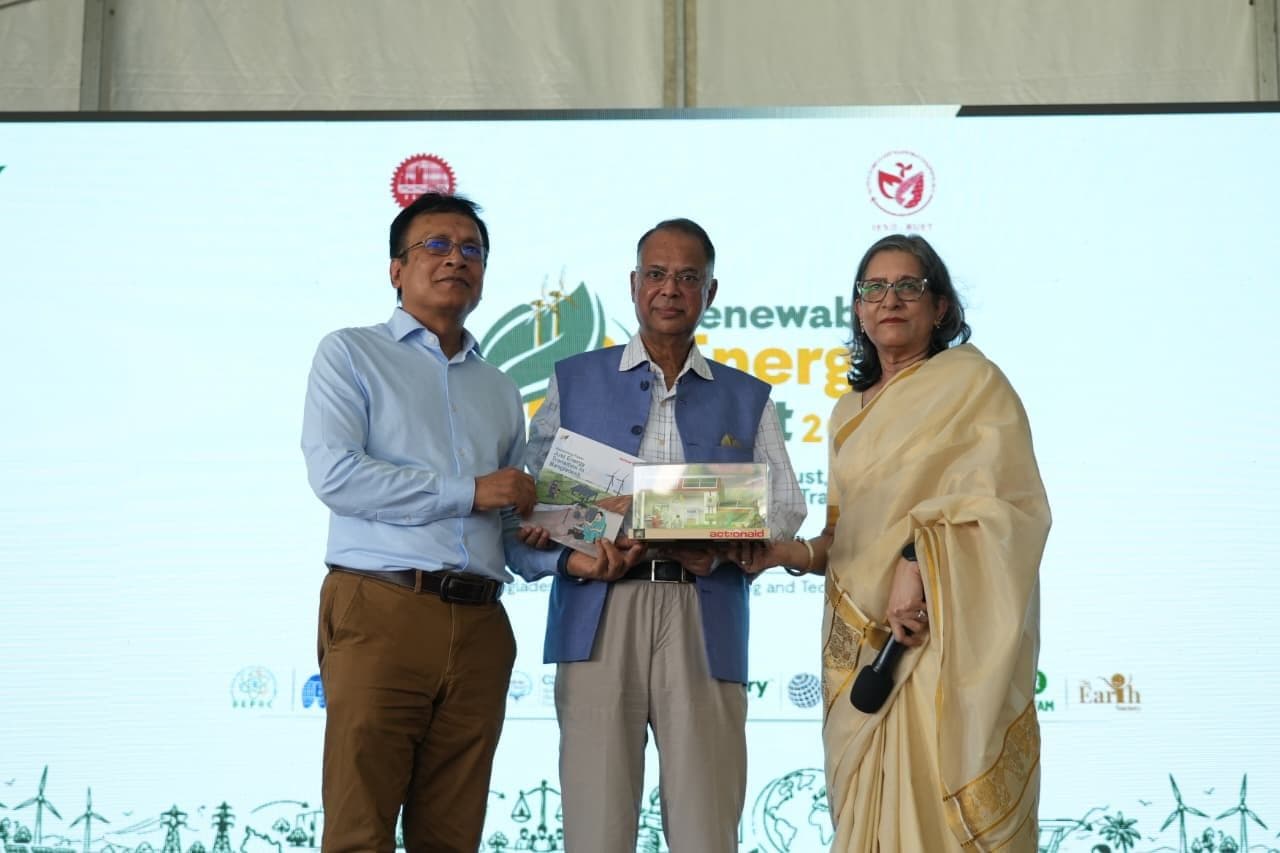
Iqbal Hassan Mahmood, MP, Minister for Power, Energy and Mineral Resources, made these remarks as the chief guest at the inaugural ceremony of the innovation and technology fair of the three-day ‘Renewable Energy Fest 2026’ held on Tuesday morning (27 October) at the central playground of Bangladesh University of Engineering and Technology (BUET). ActionAid Bangladesh, BUET, Just Energy Transition Network Bangladesh (JETnet-BD), and the Institute of Energy and Sustainable Development (IESD) of BUET jointly organized the festival.
Speaking as the chief guest, Power Minister Hassan Mahmood said, “Over reliance on fossil fuels and the impact of the Middle East war has exposed us to global market instability. To ensure future energy security, we have formulated the ‘Special Renewable Energy Law’, which will ease the decisions and activities taken between 2026 and 2030.”
He further announced that to promote renewable energy, all duties on solar technology and equipment have been lifted. Additionally, government incentives and affordable power purchasing arrangements have been introduced for installing rooftop solar panels.
The Minister noted that as the national power grid is not fully modernized, integrating power from nuclear, fossil, and renewable sources poses a challenge. However, work is currently underway to modernize the Power Grid Company of Bangladesh (PGCB). He expressed that with collective efforts, it will be possible to reach the target of producing 10,000MW of renewable power by 2030.
At the opening ceremony, Farah Kabir, Country Director of ActionAid Bangladesh, said, “Greenhouse gas and carbon emissions are the primary reasons of the global climate crisis. About 96% of Bangladesh’s electricity depends on fossil fuels, putting the country’s energy security at risk. A just and inclusive energy transition is essential for the sustainable development of the country.”
She welcomed the step to remove duties on solar equipment and emphasized the active participation of youth and women in this process.
Professor Dr. Eqramul Hoque, Vice-Chancellor of BUET highlighted the importance of innovation and research, stating, “Rising energy prices in the international market are putting pressure on the economy. Universities and policymakers must work together to protect the environment and ensure affordable clean energy for future generations.”
Among the international development partners present at the event were Tobias Bierman, First Councilor and Head of the Green Economy and Public Sector Investments Section at the Delegation of the European Union to Bangladesh, as well as energy expert representatives from Indonesia and Pakistan.
On the second day of the event, John Grimes and Scott Hamilton, representatives from the Australian Clean Energy Delegation were present. A dialogue titled ‘Dialogue with the Australian Clean Energy Delegation’, organized by the Bangladesh Sustainable and Renewable Energy Association (BSREA), featured discussions on investment in renewable energy, technology transfer, research, and building a skilled workforce.
Throughout the day-long event, students from BUET and various universities showcased several innovative projects related to solar energy, wind energy, biogas, and battery storage at the technology and innovation fair. Guests toured the stalls and exhibitions. The festival also featured youth theater performances, dialogues, and discussions on energy transition. The winners of a reel competition organized by The Earth Society were also announced on this day.
In the parallel sessions of the festival, they put emphasis on strengthening energy trade among South Asian countries and protecting vulnerable marginal communities affected by carbon reduction. Finally, the second day’s proceedings concluded with an awareness-building cultural performance and live music presented by the Shurjodoy Youth Society.
Tomorrow (28 October), on the closing day, several high-level parallel dialogues and plenary sessions will take place, taking into account national and regional contexts. These sessions will address energy policy and governance for a just transition; renewable energy financing and investment; innovation, technology, and infrastructure; as well as the social and environmental protections involved in energy transition. Experts from South and Southeast Asia will share their countries’ experiences in these sessions, with special emphasis on learning from these insights. Simultaneously, innovators, youth leaders, and partner organizations that have made outstanding contributions to the renewable energy sector will be awarded. Finally, the event will conclude with a puppet show and cultural performances. Professor Dr. Mamun Ahmed, Chairman of the University Grants Commission (UGC), will attend the closing ceremony as a special guest.
This festival, held for the second time in the country, was co-organized by the Bangladesh Energy and Power Research Council (BEPRC), Bangladesh Institute of International and Strategic Studies (BIISS), Bangladesh Solar and Renewable Energy Association (BSREA), Centre for Climate Change and Environmental Research (C3ER), Greenery Energy Solution Limited, Institute for Energy Economics and Financial Analysis (IEEFA), Oxfam in Bangladesh, and The Earth Society.