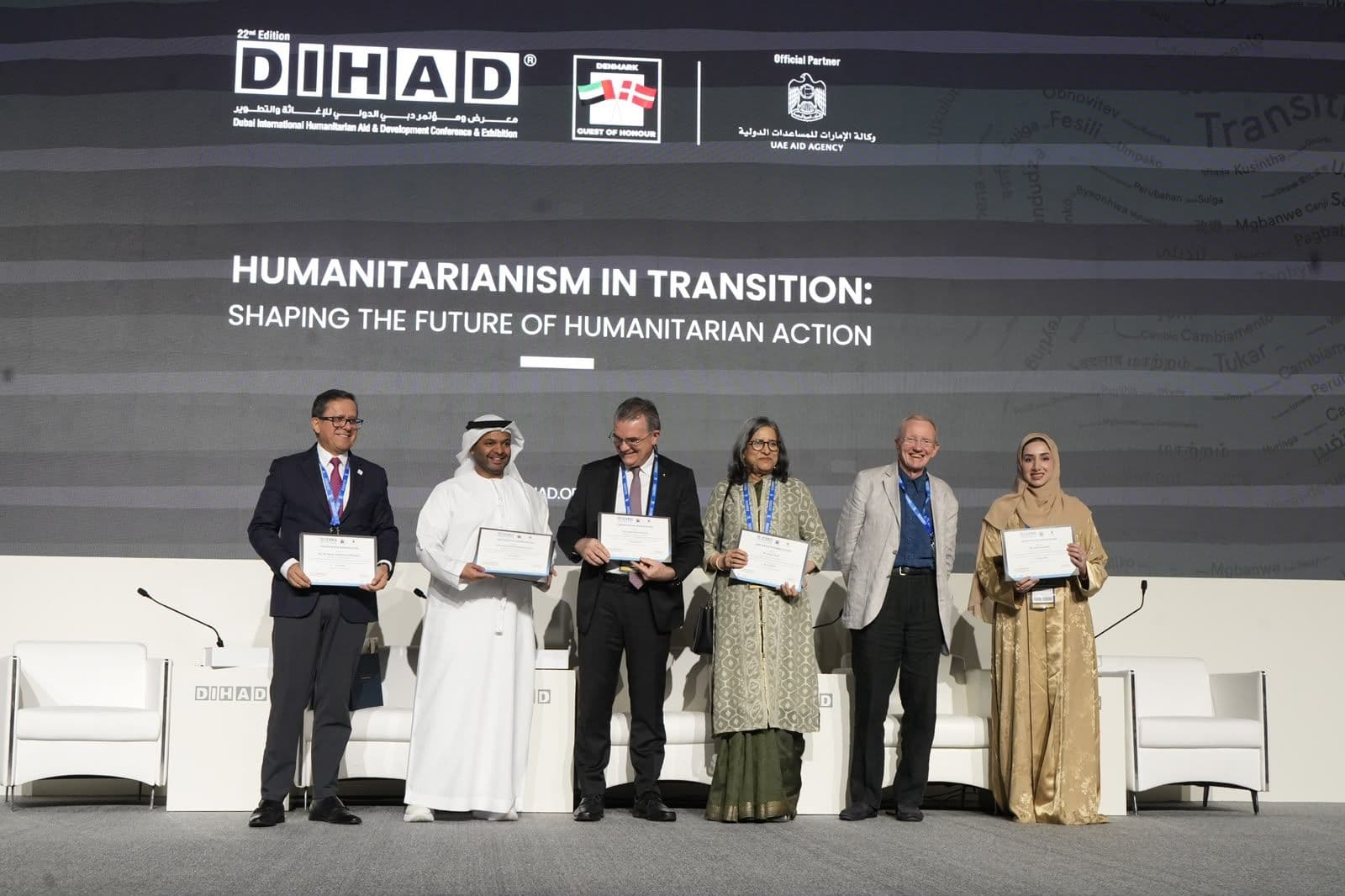
Bangladesh's humanitarian sector is at a crossroads — where localisation, private-sector partnership, and early investment in preparedness are no longer optional additions to the model but the foundations it must be rebuilt on. I have just returned from Dubai having attended the Dubai International Humanitarian Aid and Development Conference & Exhibition (DIHAD) 2026 with a renewed sense that humanitarian action is at a moment of profound transition.
DIHAD demonstrated the value of bringing governments, humanitarian organisations, donors, businesses, innovators and civil society together around a shared commitment to humanity. The most valuable conversations often happened beyond the formal sessions: exchanging experience, challenging assumptions, discovering capabilities and exploring what each of us can bring to a system under growing pressure.
One conclusion stood out: the humanitarian future cannot be built by repeating the models of the past.
It will require new ideas, bold experimentation and a generation of innovators willing to challenge how things are done. But innovation cannot simply mean new technology or new funding instruments. It must also mean rethinking who has power, who makes decisions and whose knowledge counts.
This is where localisation becomes fundamental.
Localisation is not simply about where humanitarian action happens. It is about who owns it, who shapes it and who has the power to hold systems accountable. People closest to a crisis understand its risks, relationships and possibilities in ways outside actors cannot easily replicate. Yet local organisations and community institutions are still too often treated as implementers rather than decision-makers.
True localisation means shifting decision-making closer to affected communities, investing in local institutions and recognising the leadership of women and young people. It means connecting ground realities with national advocacy and global policy spaces, so that lived experience does not merely become evidence for others to interpret but helps shape policy and resource decisions.
But localisation alone will not transform the humanitarian system. We must also rethink who belongs within it.
One of the most important opportunities ahead is to bring the private sector more deliberately into humanitarian action.
Businesses are often viewed primarily as philanthropic partners – contributing money, products or expertise when disaster strikes. That contribution matters, but it is only the beginning. National companies possess logistics networks, technology, communications infrastructure, data, supply chains, financial systems, engineering expertise and skilled people that can be critical before, during and after a crisis.
Why should these capabilities remain outside the humanitarian architecture?
This does not mean asking businesses to replace humanitarian organisations. Humanitarian principles, protection and accountability must remain at the centre. But national companies can become strategic partners in preparedness, early warning, emergency logistics, digital solutions, cash delivery, resilient infrastructure and recovery.
For Bangladesh, the opportunity is particularly significant. We should move beyond corporate philanthropy towards corporate humanitarian partnership – structured arrangements in which government, civil society, humanitarian organisations and national companies agree in advance what each can contribute when crisis strikes.
That requires more than goodwill. It needs clear protocols, incentives, standards and accountability. Governments must create an enabling environment; donors must recognise private-sector capabilities as part of resilience; and businesses must see humanitarian engagement not simply as corporate social responsibility, but as a contribution to national resilience.
Preparedness is perhaps the clearest case for investing before crisis strikes. Bangladesh has demonstrated what sustained investment in early warning, cyclone shelters and community preparedness can achieve. The experience of Cyclone Remal offers another powerful lesson: an evaluation found that every US$1 invested through Start Ready could save an estimated US$14.88 in livelihood income and US$7.50 in damaged assets.
Nepal's devastating August 2026 glacial flood offers an equally important warning. Early warning is only as strong as the hazards it can detect, the information available across borders and the ability to communicate and act in time. The disaster underlines the need for stronger monitoring, data-sharing and warning systems – but also for alternatives when formal systems fail.
For Bangladesh and other climate-vulnerable countries, the message is clear: we need layered preparedness – better forecasting and monitoring, local knowledge, multiple communication channels, community capacity and pre-agreed finance. The question is no longer whether we can afford to invest in preparedness. It is whether we can afford not to.
DIHAD also reminded me that humanitarian action is ultimately about relationships.
No single organisation has the knowledge, resources or legitimacy to respond to the crises ahead. We need governments that enable rather than centralize; humanitarian agencies willing to share rather than guard expertise; donors prepared to finance systems rather than only projects; businesses ready to contribute capabilities as well as capital; and communities recognised as leaders rather than beneficiaries.
This requires a different kind of partnership – one based not on hierarchy but on complementarity.
The humanitarian system has spoken for years about localisation, anticipatory action, innovation and partnership. The next step is to make these principles part of how the system actually operates. Another round of declarations will not be enough.
We should leave DIHAD not simply inspired, but challenged: to localise power, act earlier, bring national private-sector capabilities into humanitarian delivery, invest in women and young leaders, and build partnerships around what each actor can genuinely contribute.
The future of humanitarian action will not belong to any single institution. It will belong to those willing to share power, knowledge, risk and responsibility.
The question is no longer whether we can do more.
It is whether we have the courage to do it differently – and together.
Farah Kabir, Country Director at ActionAid Bangladesh.
________________________________________________________________________