
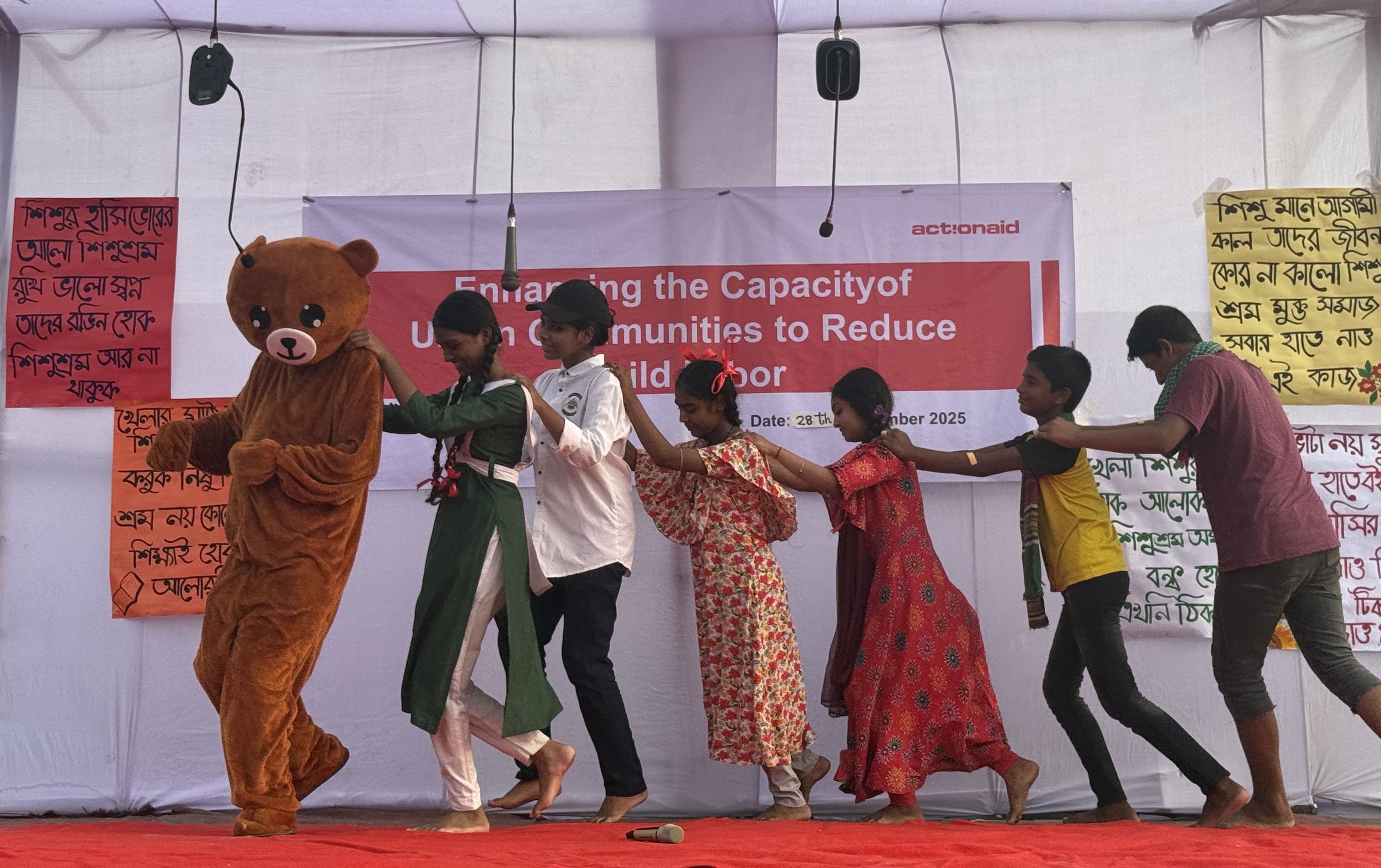
Child labor continues to be a serious challenge in urban Bangladesh, particularly in Dhaka and Chittagong, where poverty, school dropout, and limited livelihood opportunities push children into hazardous work. According to Bangladesh Bureau of Statistics (2023), approximately 1.28 million children aged 5–17 are engaged in hazardous labor, most of them in informal sectors where legal protection is weak.
Implemented by ActionAid Bangladesh with support from ActionAid Italy, this project adopts a holistic and community-driven approach to address the root causes of child labor. The initiative focuses on prevention, reintegration, economic empowerment, and strengthening community-based child protection systems.
The project began with child-led surveys covering 800 children to identify those at risk of dropout or already engaged in labor. Based on these findings, vulnerable children received scholarships and reintegration support to return to formal education. Simultaneously, parents were provided with income-generating skills training and startup grants to reduce household dependency on child income.
Community awareness sessions and child-led street theatre performances were conducted to challenge harmful social norms and promote the importance of education. By engaging teachers, Child Protection Committees, parents, and adolescents, the project fosters shared responsibility and long-term sustainability.
Through integrated economic, educational, and social interventions, the initiative contributes to building safer, more resilient urban communities where children can learn, grow, and thrive free from labor.
Project Key Outputs
- During the reporting period, the project directly reached 800 children through community-based child-led surveys across four urban areas. As a result, 60 children at high risk of school dropout received educational scholarships, while 12 children previously engaged in labor were successfully reintegrated into formal education with financial and remedial support.
- To address economic vulnerability, 60 parents received income-generating skills training in demand-driven trades such as sewing, Nakshi Kantha making, cake baking, and beautification services. Among them, 40 families were supported with startup grants to initiate small businesses, resulting in improved household income and reduced risk of children returning to work.
- In addition, 40 adolescents gained technical and digital skills to enhance future employability while continuing their education. Community protection systems were strengthened through 8 Child Protection Committee sessions and 2 multi-stakeholder workshops, with 15 head teachers formally committing to support vulnerable children.
- Child-led awareness initiatives, including street theatre, reached over 1,200 community members, promoting collective responsibility to prevent child labor.