
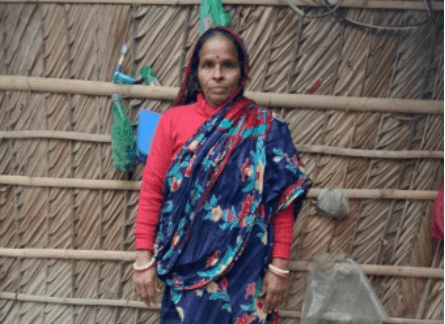
Anila Mollick is a 40-year-old woman living in Madurpalta village under Sundarban Union of Mongla Upazila in Bagerhat district. She is a housewife and has also been working as a matchmaker in her community for the last 15 years. During this long time, she arranged many marriages. In the past, she did not consider the legal age of the bride and groom while arranging marriages.
A few days before, Anila arranged the marriage of a 13-year-old girl named Shyamoli. When Anila received an offer to find a bride for a groom, she selected Shyamoli from her community. Shyamoli was a student of class seven and the second daughter of her family. She had an elder sister who was also attending school. Shyamoli’s father was blind and unable to work. Her mother alone managed the family expenses and the educational costs of the children, which was very difficult for her.
Anila suggested Shyamoli’s mother marry off her daughter, saying that Shyamoli was not very attentive to her studies. At first, Shyamoli’s mother refused. However, due to continuous pressure and persuasion from Anila, the mother finally agreed to the marriage. After marriage, Shyamoli faced many serious problems. Because of her young age, she had no knowledge about managing a family or handling marital responsibilities. Soon, her husband started demanding dowry to buy a motorbike. He threatened to divorce Shyamoli if the dowry was not paid. He also physically abused her.
Shyamoli shared her suffering with her mother. Her mother took a loan from a local cooperative and somehow managed money to buy a motorbike for her son-in-law. However, the violence did not stop. The husband again demanded more money to start a business and continued beating Shyamoli. When Shyamoli refused to bring more money from her parents, she was forced to leave her husband’s house. After a few days, her husband divorced her.
Later, Anila Mollick participated in a Value Clarification Session organized by JJS at Sundarban Union Parishad. In the session, she learned about the legal age of marriage, the laws related to child marriage, and the punishment for arranging or supporting child marriage. She also learned about the harmful impacts of early marriage, such as domestic violence, dowry-related abuse, early divorce, health risks, and loss of education.
After returning home, Anila reflected deeply on her past actions. She remembered the early marriages she had arranged and realized that none of those couples were living happy married lives. She clearly understood why Shyamoli could not continue her conjugal life. For the first time, Anila felt deep sadness and guilt for her role in Shyamoli’s suffering. She strongly regretted her past actions and promised herself that she would never again arrange any marriage involving underage children.
A few days later, Anila received another offer to arrange the marriage of a 15-year-old girl. This time, she immediately refused. She explained to the girl’s guardians the dangers of early marriage and the future problems the girl might face. She also informed them about the marriage law and the legal punishment for child marriage. Even though the guardians offered her a large amount of money, Anila remained firm and refused to arrange the marriage. Initially, the guardians agreed to wait until their daughter reached the legal age.
However, after some days, Anila learned that the girl had been married secretly in another place to a 40-year-old man. This news deeply saddened Anila. She realized that despite her strong effort, she failed to stop the child marriage. She felt helpless and disappointed that she could not protect the girl’s future.
Despite this failure, Anila did not give up. She continues to share her knowledge with community members, neighbors, and other matchmakers. She advises parents not to marry off their daughters early and encourages them to ensure education, safety, and a secure life for their children.
This case study shows that value clarification sessions can bring positive change in mindset, but stopping child marriage also requires strong community support, law enforcement, and continuous follow-up. Anila Mollick’s story highlights both the success and challenges in preventing child marriage at the community level.